• Chatauqua Institution Website

    Chautauqua Institution Website

    https://www.chq.org

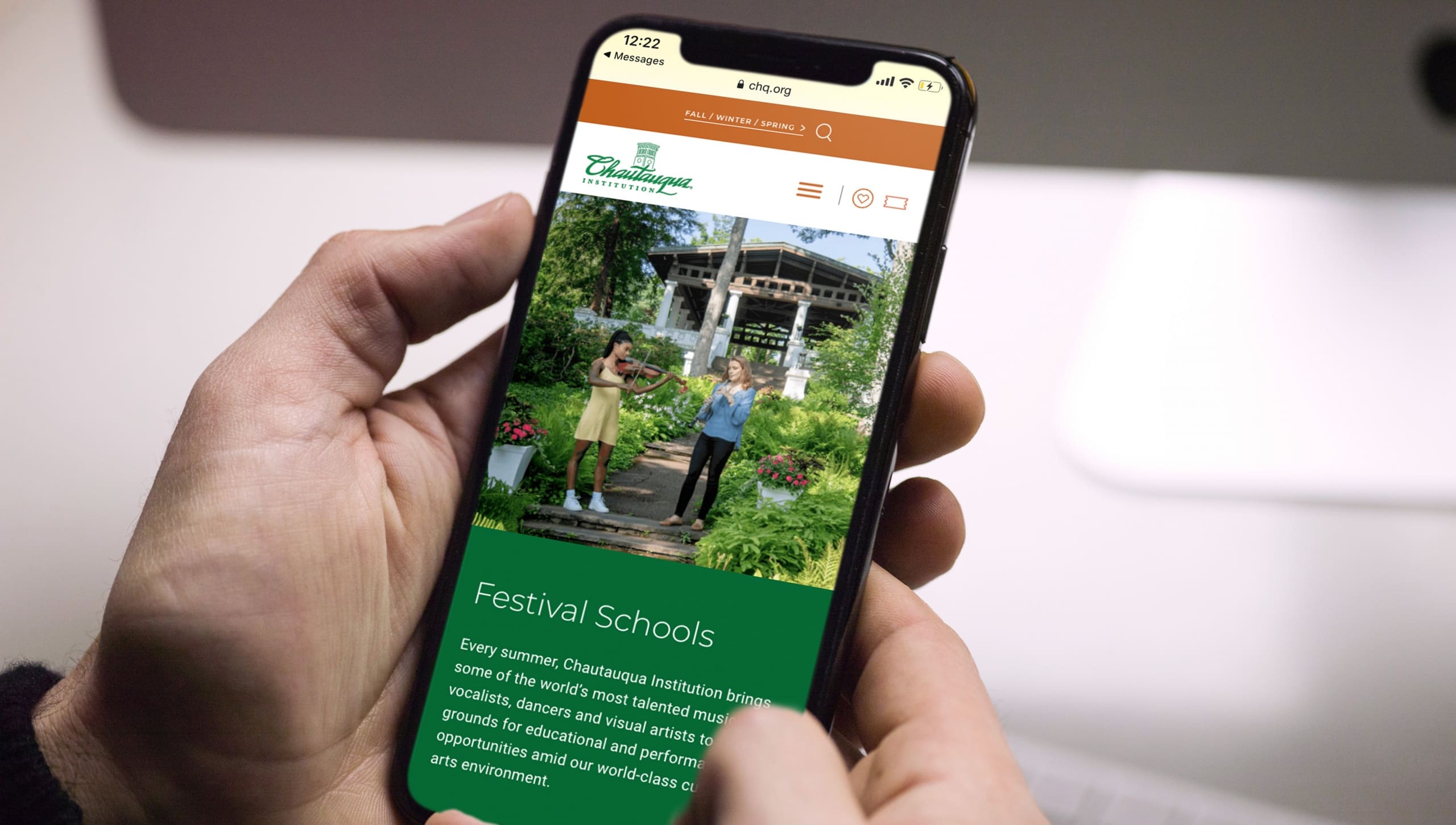
    Chautauqua Institution is a go-to destination for those seeking a vacation destination, concerts, lectures, as well as other experiences. As they transitioned their business due to the impact of Covid-19, their in-person events now had to shift to the virtual space, while still planning for when patrons could return to the grounds in person.

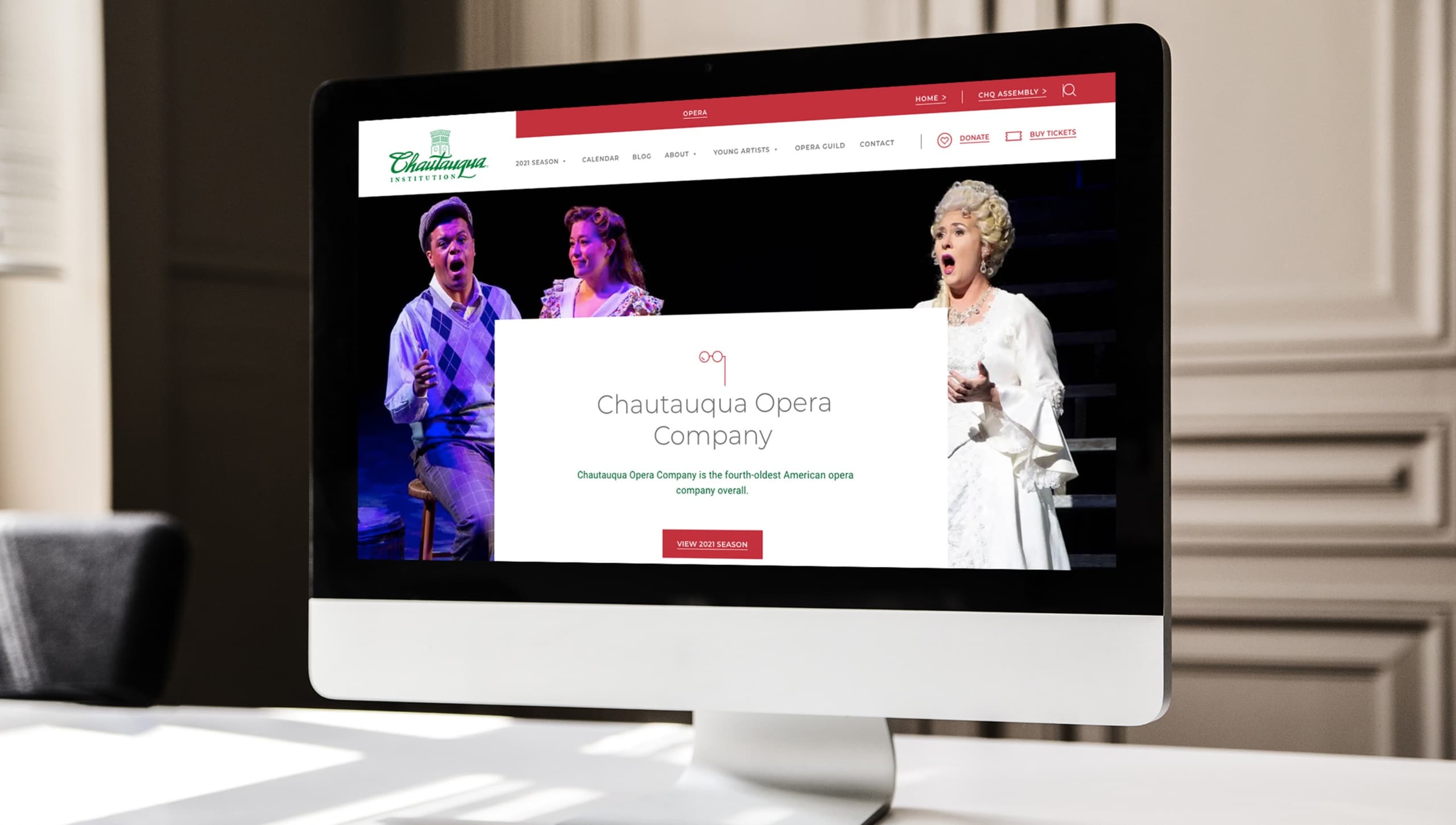
    We were tasked with converting their 2,000+ page Joomla site to a new WordPress-driven website, expanding it’s features and functionality to support modern travelers. We created a new modular website design that expands on their existing brand standards, allowing internal teams to quickly edit and remix pages as needed.​

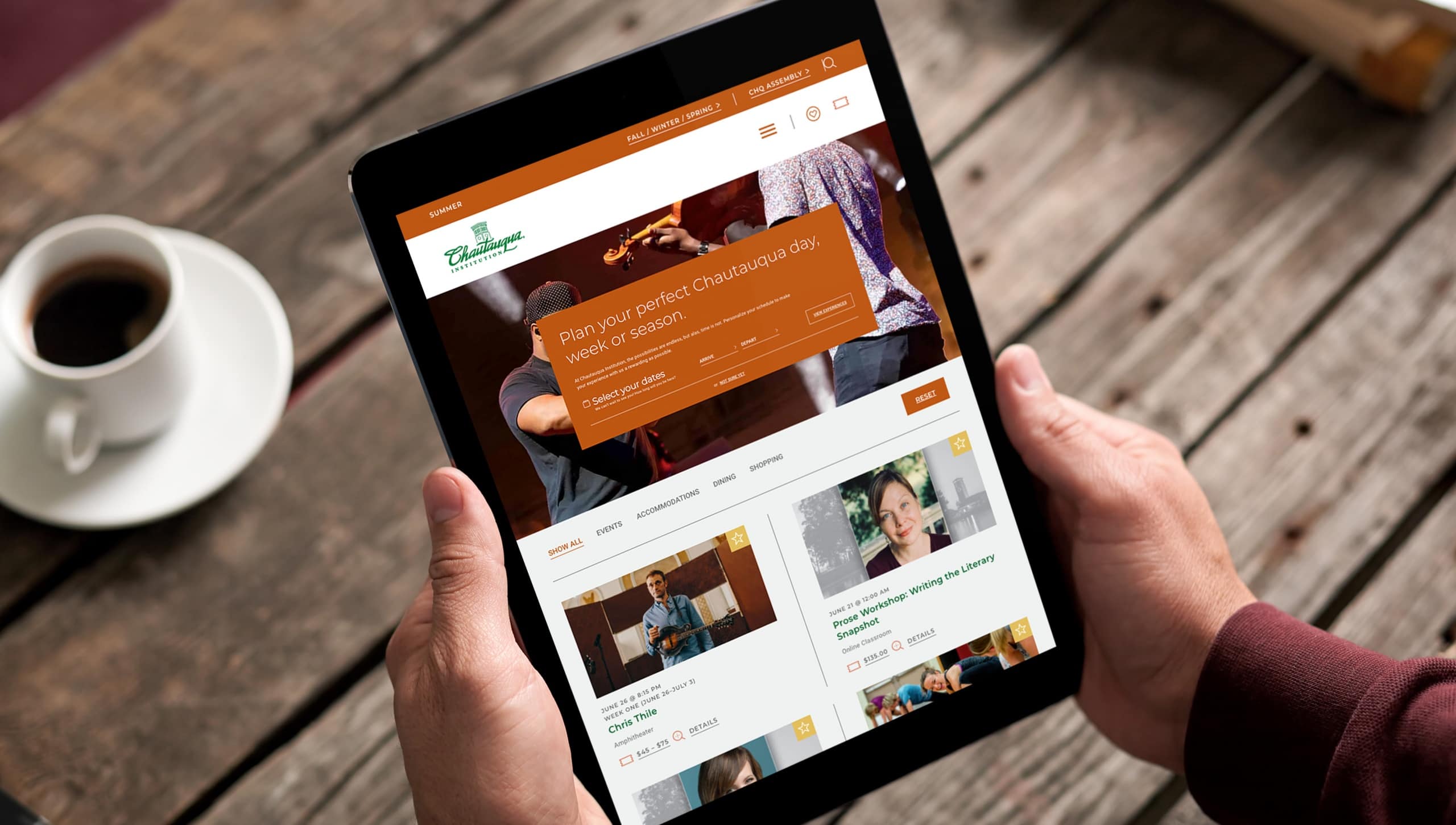
    The website’s look, feel, and content changes based on the season to provide visitors with the most relevant content possible. We built a custom Experience Planner tool, providing interactive ways to search through thousands of events and restaurants to plan a trip.

    A dynamic favorites system was introduced across the website allowing patrons to find and save Restaurants, Accommodations, Restaurants, and Events to revisit later.

    https://youtu.be/zLk4XWx87Vw

    Key Website Features

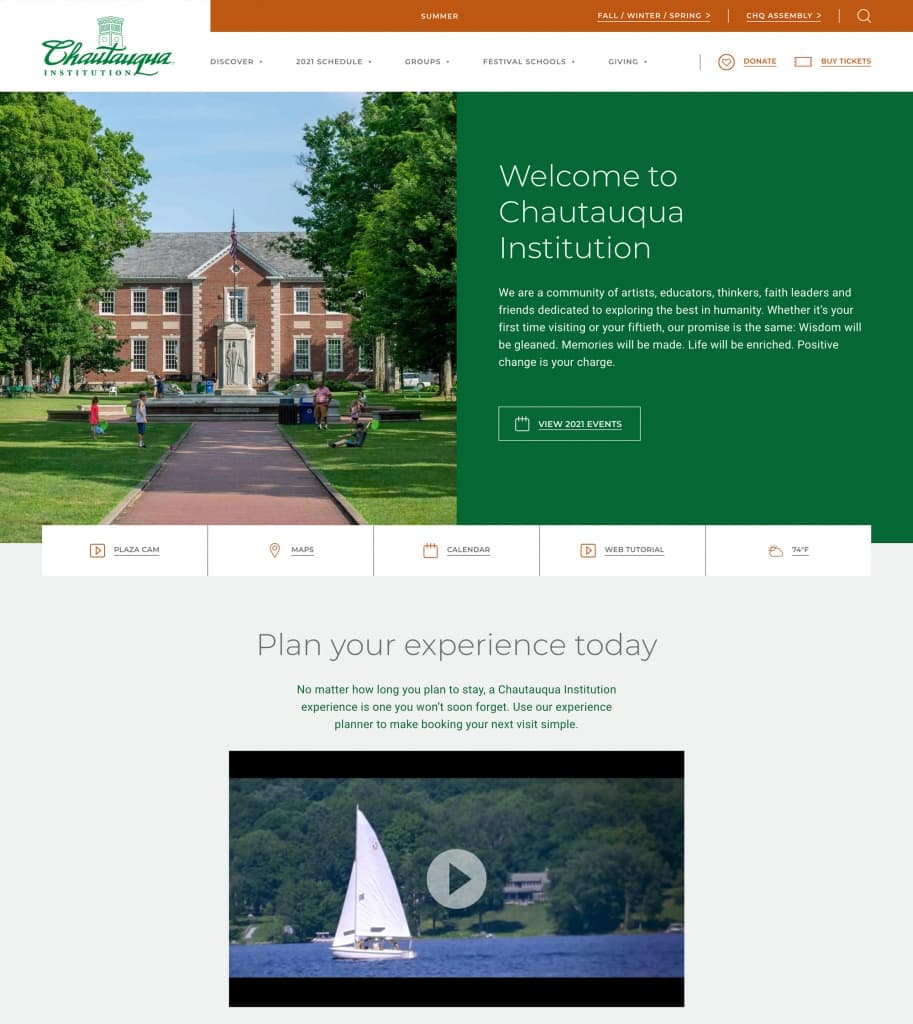
    • Toggle between their Summer and Fall / Winter / Spring seasons for a different experience
    • Dynamic events system that allows you to filter, search, and browse through their 700+ yearly events
    • Experience Planner allows you to select a your trip dates and find Restaurants, Accommodations, Restaurants, and Events that match your needs
    • Save your favorite items throughout the site and use and send it to your email or print for later
    • View a realtime camera of the plaza at CHQ to check the weather
    • Website is completely customizable by website administrators through a dynamic block system built on WordPress + Gutenberg

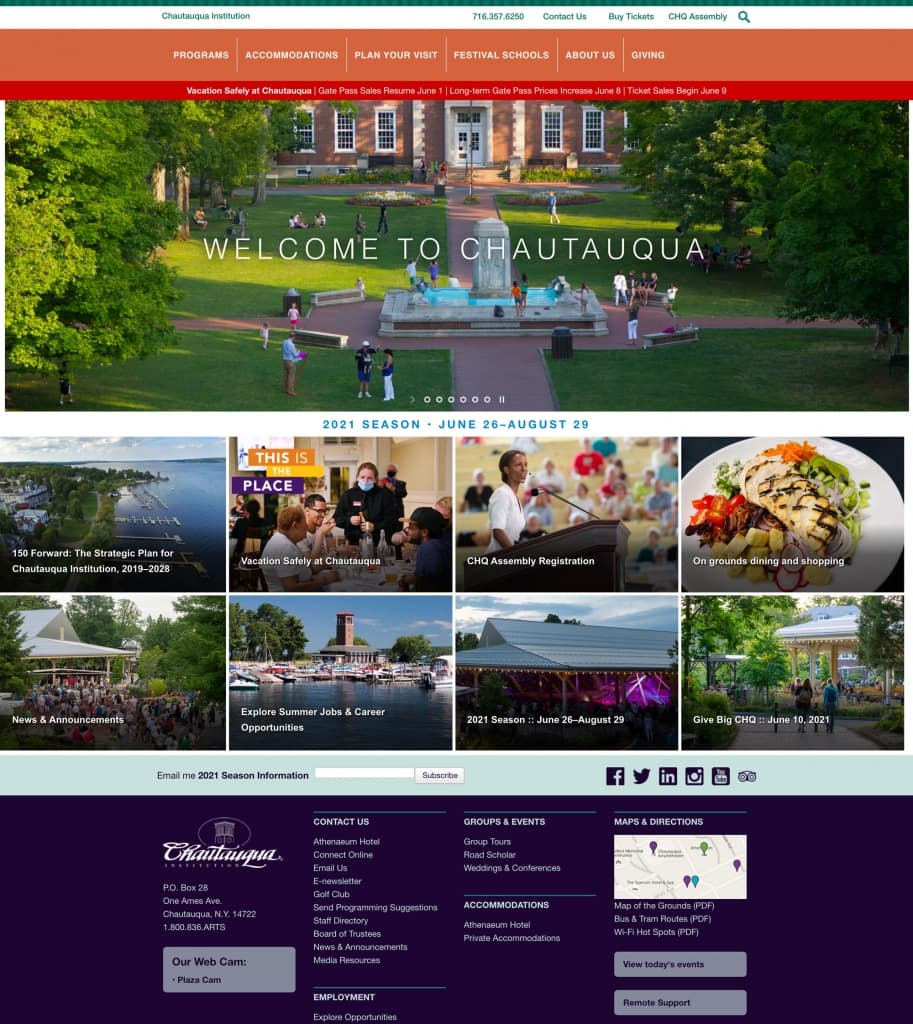
    Original Website / Website Redesign

  • What is Your Public Affairs Strategy?

    You searched for new era cap – Page 23 of 31 – The Martin Group

    By Andrew Mangini

    Every business or organization operates in an ecosystem dictated by government policy, stakeholder input, and public opinion. Your public relations strategy most likely works to promote your business or product in a strategic manner to your consumers and creates a positive public image. But how are you communicating to stakeholders? How do you engage with elected officials who determine policy regulating your industry? Are you shaping the public debate? Beyond your established public relations initiatives, a public affairs strategy is a nuanced segment of strategic communication and counsel that moves a larger needle to benefit your business. That’s where our Public Affairs team comes in.

    The Room Where It Happens

    New York State, and state governments throughout the country, counties, and local municipalities pass regulations and laws that touch every corner of every industry. The liquor licenses a bar needs to operate, the hours agricultural laborers are able to work to get milk on our table, and the way light is powered—all of these decisions are made by governments.

    Your voice needs to be heard as regulations are being decided that directly impact your day-to-day operations. What are you doing to ensure your voice is echoing in the halls of power? This is often a blind spot to businesses that do not employ a formal public affairs strategy, or one that is not leveraged to the fullest potential, despite having the most consequential outcomes.

    And when these regulations are made and decisions handed down to the industry, success often is determined by effective communication to the masses. Stakeholders need to be reassured of continued and successful business operations, and the public needs to hear your voice and message as they digest the information.

    Inform the Public Debate

    Shaping the public debate is a nuanced and subtle practice that leverages traditional public relations tools in a strategic manner, backed by a deep understanding of a legislative or governmental landscape. It is creating an echo chamber around stakeholders, decision makers, and law makers that is undeniable and shaped by your position.

    COVID-19 and its impact

    There was no better example of the need for an effective public affairs strategy than the events of the past year in the wake of the COVID-19 pandemic. Almost every industry was slammed with changing state guidelines seemingly overnight. Early on in the pandemic, many tuned in to daily news conferences to understand the next regulation impacting their industry. Businesses armed with a public affairs apparatus deployed their resources early and effectively. Now during recovery, they are leveraging the same counsel and strategy to inform decisions surrounding economic recovery. There is no question that the public debate, informed by public affairs strategy, has worked to support the economic recovery of struggling industries and businesses.

    Public Affairs is the Answer

    At the intersection of business, government, and media is where a winning public affairs strategy lives. Similar to the realm it hopes to influence, it is sophisticated, intentional, and high-stakes. A successful public affairs strategy can change the course of the industry in favor of a business or position. Don’t be left in the dark without one.

    In February of 2021, The Martin Group acquired Albany public affairs firm Gramercy Communications. If you are interested in learning more about our expanded PA expertise, please drop us a line.

  • Key Insights from the 2020 Food Industry Summit

    You searched for new era cap – Page 23 of 31 – The Martin Group

    Remember precented times? Stopping to grab some bread and milk on the way home from the office? Browsing store aisles for new items not on the grocery list? Not internally screaming because the person behind you in line has their nose sticking out above their mask? So much of daily life has been disrupted or altered since the pandemic began, including the way food and beverage retailers have had to pivot rapidly to meet not only safety protocols but the shifting priorities and shopping habits of consumers.

    As part of a series of virtual summits for Saint Joseph’s University’s food marketing program, food and beverage professionals from some of the world’s largest companies shared insights into what they believe will be some of the biggest changes, innovations, and struggles with for F&B retailers as we leave old strategies in the “before times” and adapt for whatever the “new normal” becomes.

    Obviously ecommerce and online shopping are only going to become more ubiquitous for consumers, but it’s the types of items that folks are shopping for that are shifting along with their behavior. Everyday items—those consumers typically pick up at the grocery store—are becoming much more frequently purchased online, and that habit likely won’t be reverting once social restrictions on in-store shopping are lifted. So, what does that mean for retailers and consumers? Here are some key insights from the 2020 Food Industry Summit.

    Consumers are curious to try new, low-touch activities.

    75% of consumers have tried a new shopping behavior and most intend to continue shopping this way after the pandemic. This includes things like online ordering and delivery from restaurants, use of subscription-based meal kit services, and online grocery ordering and delivery (both store-branded and third-party services like Instacart.) This is an opportunity for businesses to introduce, improve, and/or promote these services to new and existing customers, as online grocery shopping is expected to double in the next five years.

    Benefit for consumers: Convenience.
    Stores and businesses that may be “out of the way” from a typical commute can now be accessed directly from home. This not only saves time, but can also save consumers money by disrupting casual browsing and exploration of new products while wandering down the store aisles.

    Challenge for consumers: Barrier to entry.
    After several instances of online ordering, algorithms and saved preferences drastically cut down time spent placing an online order, but the initial setup of creating and account and browsing a seemingly endless sea of options can be daunting for consumers. Consumer belief that shopping for groceries online saves time increases with each time they do it, after the first attempt.

    Brand loyalty is less important than ever before.

    With access to a vastly wider pool of retailers online, consumers are becoming less concerned with sticking to their favorite brands and are prioritizing availability and value over loyalty. The way in which people shop online is also accelerating this trend. In fact, 81% of grocery item searches on Amazon do not include a brand name at all. Shoppers are searching for the type of product they need, not the brand behind it.

    Benefit for brands: Discoverability.
    Brands that may have been overlooked by consumers on store shelves can become much more visible and appealing to consumers shopping online. Particularly those with greater distribution or availability.

    Challenge for brands: Loss of share.
    Products that capitalize on the physical look and feel of their packaging to command higher price points lose that advantage in the digital space and therefore can lose customer share to brands that speak to the value-driven consumer. Many brands are trying to combat this issue by adjusting packaging designs for a digital-first look, as well as updating on-package language, product description language, and metadata to improve discoverability during search.

    Rising use of robots, dark stores, and ghost kitchens

    Sounds very fitting coming out of 2020, no? Although they may sound ominous, dark stores (warehouse-like fulfillment centers with no in-store shopping) and ghost kitchens (a no-dining-room, kitchen-only, delivery-only restaurant) are becoming an increasingly popular way for businesses to cut down on their operating costs. With pandemic safety protocols and governmental mandates constantly changing, many retailers and restaurants are moving completely away from in-person interaction altogether as consumers’ digital shopping habits rapidly increase. Additionally, many are looking towards automation and other non-human methods for order fulfillment and delivery to lower spend and increase profits.

    Benefit for brands: Lower operating cost and higher margins.

    Challenge for brands: Knowing if and when to pivot.

    Benefit for consumers: Lower prices and greater availability of products.

    Challenge for consumers: None, other than initial confusion of not being able to find their favorite food spot on a map.

  • Healthcare Marketing in 2021: Planning for the Unplanned

    You searched for new era cap – Page 23 of 31 – The Martin Group

    We’re nearly a year into the COVID-19 pandemic, and at the time of writing this, the vaccine is being distributed to millions of Americans. The vaccine is a miracle of science, but until enough people are vaccinated, the virus will continue to spread across the nation. Amidst the economic stress, the isolation, and the general fear of the unknown that we can all relate to, healthcare leaders, in particular, are faced with incredibly difficult decisions that impact the health and safety of not only their valued employees, but the community-at-large.

    COVID-19 has transformed the healthcare industry by demanding innovation across each and every patient touchpoint. In the US, healthcare organizations instituted remote working for non-essential employees, worked tirelessly to ensure that virtual clinical visits were conducted safely and securely, provided at-home patient treatment plans, and developed protocols specifically to address the new climate in which we are operating. 

    But just as we couldn’t predict that we would spend the last year battling a global pandemic, it’s impossible to predict what will happen in 2021. We can, however, anticipate that the healthcare industry will continue to be impacted for years to come.

    New Competitors Recognize Patients’ Changing Needs

    The healthcare industry is constantly challenged by complex factors including health insurance reimbursements, governmental influences, restructuring, mergers/acquisitions, innovations in technology, and, most recently, the entrance of powerhouse players into new healthcare delivery avenues.

    Mega-brands, such as CVS, Walmart, and Walgreens, are changing the way healthcare is administered by announcing that they plan to provide clinical services, such as walk-in care, mental health services, and health screenings, to patients on-site or virtually through their pharmacies. In addition, private equity groups are noting the advantage in investing in the healthcare space.

    Now, these sophisticated brands and investors are entering a market that has been in need of a shakeup for some time, and they’re looking at healthcare from a different point of view. With years of consumer data collection, vertical integration structures, and significant budgets under their respective belts, they will certainly have a competitive advantage. They know that consumers demand expedited service, specifically Millennials. Millennials are not the generation of the future. They’re here now, and they are the target audience. They, along with Gen Zers, Gen Xers, and Baby Boomers, expect the brands they trust to deliver excellent customer service – and fast.

    What does that mean for regional and local healthcare brands?

    All healthcare organizations and individual practitioners have an opportunity to enhance the patient experience. Think outside the box! You’re in the healthcare space, but that doesn’t mean you can’t leverage knowledge from mega-brands in other industries.

    What do powerhouses like Uber, HBO Now, Legal Zoom, and OpenTable have in common? They ask their customers what they want regularly and pivot quickly to meet their needs. Healthcare organizations must do the same in order to compete not only with their local competition, but with services that are now available online, 24/7, to anyone with an Internet connection.

    It’s important to remember that the relationship you built with your audiences ahead of the pandemic is worth saving. So, you may need to rethink the customer experience to meet their changing needs.

    Social Inequalities Exposed

    COVID-19 has had a devastating impact on people of every color, creed, gender, and religion in the United States and across the world. That said, the spread of the virus has certainly exposed issues of inequality within the healthcare infrastructure.

    According to the CDC, there is increasing evidence that certain racial and ethnic minority groups, such as Native Americans, Hispanics/Latinos, and Blacks, are being disproportionately impacted by COVID-19. Factors that contribute to this disparity include discrimination, healthcare access and utilization, occupational impacts, education, income and wealth gaps, and housing circumstances.

    By responding to inequalities in the healthcare industry, organizations not only serve and save the lives of their diverse patients, they also impact their own bottom line. Each year, health disparities contribute to billions of medical costs, including approximately $35 billion in the cost of excess healthcare expenditures, $10 billion cost of illness-related productivity loss, and almost $200 billion in premature deaths.

    While this issue is incredibly complex, healthcare leaders can start by publicly communicating their organization’s stance on addressing the health disparity. By doing this, you’re telling your patients, your staff, and your partners in the community that each of their lives is important, respected, and equal.

    Rethinking the Current Model of Healthcare

    In 2021, as with 2020, many organizations are going to be challenged to think outside the box and innovate to improve the lives of their patients. For almost a year, patients have been isolated at home, turning to their devices for entertainment, news, exercise, and social interaction in order to maintain some semblance of normalcy. While telehealth enabled patients to interact with their doctors virtually, the isolated patients looked to their devices for other health resources as well.

    After the shock of the pandemic set in and consumers realized that they needed to make the best of the situation, many of them turned to companies like Peloton, Melissa Wood Health, and Under Armour’s Map My Run to stay in shape while gyms were closed or at limited capacity. Meditation apps, like Headspace and Calm, also gained popularity over the past year as we turned inward to focus on our mental health during these stressful times.

    How can healthcare providers leverage the heightened interest of individuals in their own health at this time?

    • Analyze the market research available to you. If you’re a physician or healthcare administrator, analyze your HCAHPS scores, online review sites, or proactively send a survey to patients asking for their feedback.
    • Walk through your own customer experience to identify opportunities for improvement.
    • Ensure that telehealth visits are customized to the patient. This is a brand-new medium for patients, so there’s opportunity to define high standards and top level care.
    • Make the customer experience personal by leveraging HIPAA-compliant messaging systems.
    • Encourage patients to measure their health through apps and wearables.

    Marketing Post-Pandemic

    The best way to reach your customers right now and in a post-COVID world is through word of mouth. What is the world’s largest word of mouth tool? Digital advertising. While every healthcare organization is different, a handful of marketing tactics should be considered.

    • A user-friendly website is a top priority in today’s digital age. It’s been said that the website is the new front door to your hospital/practice – and any brand, really. Over 70% of healthcare consumers start their search for a provider by looking to the Internet, and Google received more than 1 billion health-related searches per day in 2019 (pre-pandemic)! If your patients’ web searches don’t lead them to your website and/or your website doesn’t give them the answers they need or is difficult to navigate, they’re very likely going to shop around.
    • 3.3 billion people across the globe are now active on social media. That’s nearly half of the world’s population! Is your healthcare organization on social media? From a branding perspective, it’s very important to have a social media presence. As you already know, it’s also very important to be following HIPAA-compliant strategies. As a free tool, social media is certainly an effective way to engage with your staff, referral sources, and patient base, and to promote services, new hires, and innovations.
    • Videos and blogs written by content experts are an effective way to reach an audience that is looking to learn more about a specific topic. Not only that, this content can be repurposed for use on social media, e-newsletters, and website content. Additionally, longer-form blogs with frequently-searched keywords are favored by search engines, and help web users find you by leveraging Search Engine Optimization (SEO).

    We’re all looking forward to getting back to “normal,” but as marketers, we need to be sensitive that many consumers will be hesitant at first. Once we start to transition to a post-pandemic phase, the consumer will be acutely aware of what they just endured. That said, other patients who put their health on hold are going to be anxious to reclaim it, and we should be ready.

    For example, elective surgeries across the country have been limited in order to equip hospitals with the emergent resources they need during the pandemic. It’s fair to anticipate that there will be an influx in elective surgeries that were postponed or canceled previously. Does that mean that marketing won’t be necessary because the demand will be high? Not necessarily. It’s still important to ensure that you’re communicating your value proposition to patients and to referral sources in order to differentiate yourself from your competition.

    Navigating healthcare decisions and healthcare environments will never be the same post-pandemic. As marketing communications professionals, our role is to help our patients adjust to this new landscape and receive the best care possible in 2021 and beyond.

  • Sports Marketing Trends for 2021

    You searched for new era cap – Page 23 of 31 – The Martin Group

    The uncertainty around the COVID-pandemic continues to limit future planning as we look ahead to 2021, and sports marketers especially are currently assessing what to take away from a mercurial 2020 in terms of shopping tendencies, audience habits, and the impact of modified live events.

    So, while the world is clearly still in flux, we’ve taken a look at some of this year’s trends that we think will stick in the sports marketing realm and what we expect to be important factors to consider in 2021.

    Political Overlap

    This year will be remembered for many things, but in the sports world, 2020 will definitely be the year it became commonplace for athletes and teams to take political stands and speak out on issues like social justice. And while there is highly charged debate as to whether this has positively or negatively affected sports viewership this year, one thing is clear –  we don’t anticipate it subsiding in the near future.

    Now more than ever, athletes want to make a difference outside of games and practices. Their large, engaged social media accounts – and increasing support in the form of flexibility and opportunity from their teams and leagues – give them the platform to make an impact on important societal issues.

    Brands looking to partner with athletes (and influencers in all sectors) have more substantive content to choose from than ever before. Whenever we talk to agencies about matching a brand up with one of their athletes, our first questions are “What are your athletes interested in? What do they stand for? What do they want to do after their playing days?”

    If you’re not getting substantive answers, then the athlete is probably not right for your brand. Given the right fit, athletes can definitely be valuable to your integrated marketing plans, but make sure there is substance and purpose to any partnerships.

    And remember that college players could be an option for your brand as well, thanks to the NCAA recently opening rules around student-athletes profiting from their name, image, and likeness (NIL).

    Stand for Something

    A trend across the marketing landscape is consumers’ desire for brands to not only talk about making a difference but to back that up with tangible action. That can mean a financial or resource investment, but the key factor is building trust by demonstrating that you care about something more than profit and growth: you need to impact issues that are important to your audience.

    Clearly, and justifiably, social justice issues have dominated in 2020. The importance of corporate social responsibility isn’t going to wane, so it’s important that companies focus on their own diversity, equity, and inclusion.

    It’s also clear that especially Gen Z really values sustainability and are environmentally conscious in many of their purchasing habits. Some athletes are even speaking out on previously taboo topics in the sports world like mental health.

    Bottom line, make sure you are making business decisions that positively impact your consumers, employees, and communities: as Pernod Ricard CEO Ann Mukherjee said on a recent Adage podcast, we need to replace the focus on “return on investment” with “return on responsibility.”

    TV Ratings Decrease But Rights Deals Increase

    One of the most debated stories in sports during 2020 has been the decline of TV ratings across every major league.

    2020 Sports TV Ratings (via Sports Media Watch)

    • MLB World Series: -32%
    • NBA Finals: -49%
    • NHL Stanley Cup Finals: -61%
    • NFL Regular Season (through Week 5): -13%
    • Kentucky Derby: -43%
    • US Open Tennis: -45%
    • US Open Golf: -42%

    This comes with the next wave of negotiations set for 2021, though some expect rights deals to continue to increase in value.

    There is considerable debate about why we’ve seen such rampant declines – including some claims that athletes taking political stands has led to lower ratings – but one thing is clear: live sports is really the only appointment viewing left.

    So whether that is spending big dollars to advertise during broadcasts (Buffalo Bills ratings have bucked the NFL’s trend and actually increased this fall in Western New York – thanks largely to their positive start), sponsoring one of the many new in-game opportunities that are taking fans closer to the athletes on the field, or utilizing more grassroots efforts like timing your social media pushes with targeted, relevant content around live games, being involved with sports events have tremendous value in the equation of how to reach your consumers.

    One important note here is that without gate receipts, all teams are scrambling for other revenue solutions, so now is a great time to be pitching new and fresh sponsorship ideas. 

    And if traditional sports are too expensive and crowded, the e-sports and sports gambling spaces continue to gain traction and sophistication (legislatively on the gambling side this election season but also business-wise as both industries rapidly mature), providing increasingly valuable alternatives.

    Shopping in Micro-Moments

    The barrier to online purchasing no longer exists. This is one of many trends that has been significantly advanced by the COVID-19 pandemic: consumers will buy anything on their phones at just about any time. This new “micro-moments” trend means that shoppers are making more transactions through their smartphones, especially while watching TV, traveling, working, etc.

    This is good news for sports marketers: more and more fans are scrolling through their phones while they’re watching games. So a smartly timed email blast is a great opportunity to put out conversion-based messaging – just be sure you’re authentically and constructively hooking your communications around events and news relevant to your audience.

    There is No Brand Loyalty

    We are hearing more and more about consumers’ increasingly eroding brand loyalty. According to Forbes, “75% of consumer have tried different stores, websites, or brands during the pandemic” – and “60% of those expect to adopt new brands and stores into their post-pandemic routines.”

    You should be constantly nurturing your consumers and maintaining a community with your audience – not just with sales messages, but through content that adds value to their lives while also complementing your overall goals.

    Across the board, brands are going direct-to-consumer, thanks mainly to the unreliability of brick-and-mortar shopping. So if you haven’t adopted an e-commerce strategy in 2020, it should be atop your priority list for 2021 – knowing that you can’t just set up a platform and expect people to start buying from your website without an integrated plan to launch and promote this new service.

    Transparency and Authenticity

    These are not new buzzwords for marketing. But the pandemic has definitely taught us all that imperfections are not only acceptable but welcome. Thanks to the proliferation of incessant video calls with our coworkers and clients, and event artists and entertainers “performing” from home, we’ve been invited into just about everyone’s houses over the last eight months. It’s clear consumers care more about transparency than perfection. So keep that in mind with all of your communications efforts in 2021 and beyond.

  • How to write and deliver a speech that inspires action

    You searched for new era cap – Page 23 of 31 – The Martin Group

    “Ask not what your country can do for you. Ask what you can do for your country.”

    You know the line. You remember it. And you might even quote it from time to time. When President John F. Kennedy delivered those words in his 1961 Inaugural Address, he connected with people across the nation and compelled them to take action.

    You may not have President Kennedy’s eloquence—or his team of writers—but you, too, can deliver a strong speech that will drive your target audience to support your cause, join your team or buy your products.

    And whether in person or via Zoom, the most effective speeches combine strategic writing, advance planning and confident delivery. And, when done well, they can be a powerful tactic in many public affairs and marketing campaigns. So, let’s get started—11 tips to rock your next speaking gig and inspire your live or online audience.

    1. Know your audience and what will resonate

    Your audience wants to be informed, engaged and entertained. If you use material that won’t connect with them, you’re wasting your time—and theirs.

    Think ahead about who will be in the room and understand what matters to them. Additionally, consider who you want to reach with your speech once it has been shared online or in the media. There’s a difference between the audience in the room and your target audience. Sometimes they’re the same, but not always. Deliver messages that will inspire action from your target audience, but don’t ignore the people in front of you.

     2. Drive your speech with a story, and fuel it with data

    Humans connect with stories about other humans. We care about numbers, but we’ll remember a story. Strong speeches often use the narrative of one person or a group of people to bring a problem, opportunity or idea to life.

    Where can you find original stories for your speech? Talk to your colleagues and employees, engage the community and stakeholders or consider your own personal experience. If you’re the person leading a campaign to promote a product or issue, it’s likely people will want to share their stories with you—and you should share them with your audience. That said, don’t forget to add statistical data to your anecdotal evidence. Stories backed by numbers tend to make the largest impact.

     3. Give a speech, not an essay

    Write like you speak. Most people will watch or listen to your speech. Some might see a quote in the newspaper. Very few will read the full text (unless it makes history).

    You never want to ignore grammar and syntax. But, rules can be broken, especially if it adds to the passion or pacing of your speech.

    Use short sentences. Mix in a few long ones to help your terser phrases and sentences grab attention. Speak in active voice and pack in action verbs—both make your messages more vibrant and compelling. As you write, read your sentences out loud. Assess how the words and phrases interact. Keep your ears tuned to the pacing of your speech. If you’re getting bored reading it, edit it to make it sharper and shorter.

     4. Think about the sound bite

    If you’re speaking at a rally or news event, you need determine the key takeaway you want people to remember. Ask yourself, “If this speech is meant to inspire, what message needs to be in the stories about it?” The answer will lead you to the sound bite you want reporters to use.

    Write the sound bite to be concise and quotable. No longer than 10-15 seconds, if possible. Play with clever phrasing and colorful words. Make it grab attention. In your script or notes, highlight or underline the sound bite—this will serve as your cue when reading it. When you deliver the speech, hit the sound bite hard, state it clearly, and be sure you’re not looking down at your notes.

     5. Create a compelling, memorable Call to Action

    That line from President Kennedy—it’s a Call to Action. It captures attention and challenges the audience to get involved and do their part. Strive to emulate it. However, don’t get so hung up on creativity when a simple, direct Call to Action can be just as effective. You can use the pacing of your speech and the imagery of your writing to build up to an easy-to-understand phrase that motivates your audience to act.

    “Stand with us.” “Sign our petition.” “Experience a life enhanced by our technology.” Whether a candidate, an activist or a pitchman, the Call to Action is important.

     6. Be yourself, and show your passion

    Speak from the heart. Sharing your personal experience will help you connect with your audience—no matter how far away they are. Your story will bring humanity to your words and make you a trustworthy spokesperson.

    However, if you’re writing a speech for someone else to deliver, this can be more challenging. Just like you need to know your audience, you most certainly need to know and understand the person you’re writing for. Talk to them about what they want to say. And when you go through revisions, ask for their help to make the speech more personal.

     7. Stay on message

    After spending so much time crafting the right message, don’t blow the opportunity with an ad lib that steals headlines.

    Know the key messages your speech needs to convey, and focus your energy there. If a reporter asks you an off-topic question after your speech, answer it—and then pivot back to your central messages. Do your best to keep news coverage focused on your speech topic.

     8. Nothing is off the record

    Remember Mitt Romney’s 47 percent comment in the run-up to the 2012 election? He was giving remarks at a fundraiser, and the leaked video led to damaging coverage. Use that as a lesson. Everyone, at all times, has a recording device in their pocket. When giving a speech, you should proceed as if you’re always being recorded—and the video or audio will be shared with others.

    If an organizer of a speaking engagement claims the session is off the record, be forthcoming, but remain on guard. Don’t share anything you wouldn’t be comfortable appearing online attributed to you.

    9. Keep it short—much shorter than this blog post

    I know, this blog post is getting long. But have you seen that one Woodrow Wilson quote?

    “If I am to speak ten minutes, I need a week for preparation; if fifteen minutes, three days; if half an hour, two days; if an hour, I am ready now.”

    Being concise is tough. Especially when you’re speaking on a subject you’re passionate about. When you’re writing, be a harsh editor and eliminate excess words that won’t contribute to the desired result—delivering a memorable speech that inspires action.

    10. Maximize the content

    As a public affairs practitioner who believes in working hard and working smart, this, to me, is the most important tip.

    You only have 24 hours each day. You need to sleep. You need to eat. You need to see your family and friends once in a while. If you’re going to take several hours to write, revise and deliver a speech, make sure you maximize the reach of the content you’ve created.

    Here are seven tactics to get your speech in front of your target audiences:

    • Send an email blast to supporters or customers encouraging them to attend the speaking engagement.
    • Create a Facebook event and invite followers to the speech.
    • Draft a quick media advisory and pitch the news media.
    • Shoot video and share it online—or broadcast it on Facebook Live, which gets strong user engagement.
    • Convert sections of your speech text into tweets and schedule them to publish after your speech starts.
    • Use Canva to turn your Call to Action or sound bite into a cool social media graphic.
    • Distribute video of the speech to news outlets, share it on social media and email it to supporters (and encourage them to share).

    And that’s just a start—for example, if the speech is on an evergreen topic, share it multiple times on your social media channels.

     11. Revise and practice

    Before you step up to the podium or screen, be sure you’re prepared to deliver your best speech. After you finish your first draft, revise it. Then, read it out loud. This will help you identify additional edits. Ask a trusted colleague to give it a read and suggest edits.

    When you rehearse it—and I know this will feel really weird—stand in front of a mirror or record yourself with your phone. Body language, tone and pace all matter. So, practice your speech and assess your performance.

    And since the ongoing COVID-19 pandemic has relegated many speeches to remote delivery, here are two bonus tips for speeches in the Zoom era:

    12. Talk to the camera

    There was a time that speaking to the screen of your laptop was odd and a bit uncomfortable. Skype, Facetime and nearly a year’s worth of socially distanced meetings have changed that, but there are still plenty of mistakes you can make when interfacing with technology instead of a sea of people.

    Before your scheduled remarks, try to get comfortable speaking into your camera the same way your speak to a live group, focusing on your online audience while executing crisp, coherent statements—albeit from the confines of your office or home workspace. Be aware of how you’re making eye contact with your on-screen attendees, as well as your appearance during delivery—which brings us to our next tip.

    13. Set your stage

    As we’ve now learned after months of speaking with colleagues on camera, what’s going on in their background can hamper communication.

    Is there a spouse wandering into their shot? Are children banging on the door to their home office; is there a dog incessantly barking in the background; or is drab interior decoration on camera distracting from whatever vital points he or she is making?

    Whatever the case, it’s important that the space you choose to host your online delivery be secure—and set-dressed appropriately. Make sure to assure quiet throughout your presentation, with all parties who could affect your live speech aware of your schedule. As for what’s in frame, arrange your shot’s background in either a simple, professional or complementary manner.

    There’s a reason people like to speak on camera in front of not-so-randomly arranged bookshelves. Books and photos and regional memorabilia can reveal a little about the speaker, and that can help them connect with their television or online audience—and, ideally, complement the content of their message.     

    Ready to get started?

    If you already have a speaking engagement lined up, I always find inspiration in reading and watching the speeches of some of history’s great orators. And that makes sense when you’re striving to be inspirational. If your speech needs to be delivered in a different tone – for example, down-to-earth, solemn or funny – look for videos of people speaking at a similar event or on a similar topic. Analyze what they do and don’t do well.

    If you’re just starting to look for speaking opportunities, connect with groups that often hold events. Chambers of commerce, Rotary Clubs, young professionals’ groups or industry associations. Identify how and why you would bring value to their members, and then pitch yourself as a speaker. And, if you need support with writing or preparing for a speech, developing your key messages or executing your advocacy campaign, connect with The Martin Group’s seasoned team of public affairs professionals who work with clients across Upstate New York and beyond.

  • FeedMore WNY Website Redesign

    You searched for new era cap – Page 23 of 31 – The Martin Group

    Building a brand that benefits the community.

    For decades, Meals on Wheels and the Food Bank of Western New York worked together to help eradicate hunger across our community. While their efforts had an immeasurable positive impact, both organizations felt they could do more together. Before embarking on their shared mission, leadership at FeedMore WNY enlisted the help of The Martin Group to develop the new brand while delivering on three key goals:

    • Educate the community on details of the merger and upcoming programs
    • Retain and recruit volunteers
    • Increase donations from new and existing donors.

    To best understand the challenge ahead, The Martin Group performed a discovery and strategy session. Ultimately, it resulted in a strategic brief that would help our creative team build the new brand.

    Leveraging bright, vibrant colors and a bold typeface, the new logo was attention-grabbing without overpowering. The direct, yet unique tagline “more food, more good” perfectly encapsulated the ideology behind FeedMore WNY. With these two main assets approved, our team then worked to develop other brand elements, including:

    • A full brand standards guide
    • Custom illustrations and animations
    • Website
    • Vehicle wraps
    • Brochure
    • Volunteer tote bag
    • Business cards and stationery

    Every tactic was designed to directly connect to the FeedMore WNY brand by utilizing the broad spectrum of their new color palette and playful messaging, including headlines that followed the “more food, more good” construct.

  • Back to School Like Never Before

    You searched for new era cap – Page 23 of 31 – The Martin Group

    As college students finish gearing up for the new school year, the usual late-August concerns – Did I buy the right books? Do I know how to get to all my classes? – seem quaint in comparison to the unprecedented uncertainty that COVID will bring to the fall semester. 

    For the communications departments of our colleges and universities across the country, the students are but one audience among several key constituencies that require separate, ongoing communications strategies tailored to their distinct needs and concerns.

    Here are the primary audiences for whom colleges and universities must maintain unique, COVID-specific communications microstrategies throughout the semester (and beyond).

    Students  

    While much work has already been done communicating to this audience about the myriad operational changes they will face as they return to campus, clear and consistent communication around safety precautions – both the required and the strongly encouraged – will play a critical role in reducing the risk of outbreak.

    The tone of this communication is everything, however, as the need to encourage vigilance competes with the desire to instill and maintain confidence and optimism. 

    The University of South Carolina has effectively utilized social media to convert an obligatory safety message into an inspiring call for solidarity, leveraging the hashtag “IPledgeColumbia” to ask students to take the pledge that they will do their part to protect themselves and others by following a series of public health guidelines.

    Parents

    While more than one out of every four U.S. colleges plans to begin fall classes entirely or mostly online, many schools are resuming in-person instruction and reopening their dorms. And for the parents of students returning (or otherwise heading off) to campus, the safety of their children will be of overwhelming concern. 

    This is where regular, ongoing updates about the situation on campus will go a long way toward easing worried minds. If all goes well on campus and no new cases are being reported, this good news should be communicated frequently. (Indeed, the repetitiveness of communicating “there are still no new cases” week after week will be a great problem to have.) Likewise, if cases do crop up on campus, this information must be proactively communicated by the institution, along with decisive, reassuring information about the steps the school is taking to mitigate further spread.

    Educators and staff

    This group might be the most significantly impacted by COVID-related disruption. They will have already endured considerable hardship and anxiety before the first day of classes begins, as they’ve been forced to make major adjustments to their life and work, all while – especially for untenured professors – the specter of being laid off has loomed large. Indeed, approximately 225 institutions across the country have either not renewed employment contracts or announced layoffs and furloughs, according to the The Chronicle of Higher Education’s layoffs tracker.

    As if that weren’t enough, educators returning to campus will also face heightened health and safety concerns compared to those of students, as they tend to be older and, therefore, at greater risk.

    For this audience, many of the priorities mentioned above – ongoing education around safety precautions, regular updates that communicate the institution’s progress toward containing any outbreaks, etc. – are equally relevant here. But opportunities should also be taken, whenever and wherever possible, to celebrate this group, and to thank them for the very real risks they’re enduring by coming back to campus.

    The community at large

    The local communities surrounding our reopening colleges and universities will feel a unique type of anxiety all their own. As Yasha Mounk, an associate professor at Johns Hopkins University, recently wrote in The Atlantic:

    “If colleges reopen, kids from parts of the country with high case counts will, inevitably, travel to parts of the country with low case counts—and bring their home-state problems with them. This is why the biggest threat posed by reopening colleges is not to students, faculty, or staff, but to the surrounding community.”

    Lines of communication must remain open to the community at large. In many markets, local print and broadcast media will be an invaluable conduit for delivering messages from the institution. But social media can often provide a more direct channel, and both paid and organic social media tactics can effectively deliver timely news and updates to the community. Email and SMS messaging capabilities should also be considered for more immediate, time-sensitive news and information.

    There are, of course, other audience segments – alumni, donors, policymakers, etc. – that mustn’t be ignored. But the above groups represent those set to be most impacted by COVID’s disruptions to school operations and, as such, must be prioritized accordingly.

  • Personal stories inspire the next Play Everywhere

    You searched for new era cap – Page 23 of 31 – The Martin Group

    Outdoor play is beneficial to the health and development of children.

    This is a reasonable, fact-based statement, and is backed up by everyone from nationally recognized free play advocates to internationally renowned research universities. It’s a simple realization, rooted in visions of kids on playgrounds or asphalt courts, and now expanded across the ambitious expanses of public parks or nestled within downtown streetscapes. The only problem appears to be that there still aren’t enough of these spaces inside all communities, especially those in need.

    That’s the inspiration behind the Play Everywhere Design Challenge, established by playspace-focused nonprofit KABOOM!, and supported by the Ralph C. Wilson, Jr. Foundation. Exclusive to Western New York and Southeast Michigan communities, Play Everywhere awards organizations an annual total of $1 million to create lasting, scalable design installations that provide more play-everyday opportunities for families in neighborhoods that have experienced significant disinvestment. After awarding grant monies to nearly 50 inventive installations in 2018 and 2019, the program planned to welcome applications for its third edition this summer.

    Then, the COVID-19 pandemic hit, and put the practice and safety of public play in doubt.

    In these conditions, the taken-for-granted idea of children playing freely in artistically reconfigured locales  would be clouded by concerns for both the evolving present and unknown future. There could certainly still be new and inventive playspaces, but amid ongoing uncertainties of what the eventual state of play could look like, there needed to be a way to illuminate past successes—and personify the possibilities of what can still be.

    To accomplish both of these connective elements, The Martin Group conducted a pair of interviews with two previous Play Everywhere winners to promote the competition’s application period opening on July 13. Through these interviews, we constructed two long-form features that put familiar faces on the community-energizing possibilities of creative playspaces, lamented the challenges such gathering spots face in the cautious times of COVID-19, and highlighted the overwhelming belief each has in how Play Everywhere projects can impact children—no matter the circumstances.   

    For Advancing Macomb’s “Let It Flow, Mount Clemens”—an interactive 2018 winner established to highlight its Michigan community’s history and artistic potential—the project has inspired interactive play and interest in what came before, and what can still be. For GO ART!’s winning 2019 concept, “Play Me a Tune Music Garden,” the Batavia, New York-based nonprofit established an idyllic, instrument-strewn alleyway that unveils the possibilities of music, but because of pandemic-related safety concerns, is still enthusiastically building to its intended potential.

    Together, these stories reveal not just the sentiments of each interview subject and the details of their projects. Both also provide a relatable aim for like-minded organizations, as well as inspiration for the installations that still could be. Each was established to bring communities together, and amid challenges either being managed or still unforeseen, community organizations are still working tirelessly to find ways to bring its families together within its neighborhood’s allotted space.

    Do today’s hurdles make things different for this year’s applicants? Yes—but thanks to another year of Play Everywhere, ambitious designers can access the same inventiveness as past grantees, all to devise playspaces for a different (and much brighter) tomorrow.

    For more information on KABOOM! and the Play Everywhere Challenge, visit kaboom.org/grants/play-everywhere-design-challenge. (Full application deadline is October 30.)