• Continuing to deliver dynamic work for clients will drive what’s next

    You searched for new era cap – Page 15 of 32 – The Martin Group

    Building something special doesn’t happen with the flick of a switch or snap of fingers. It takes work.

    Creative work. Committed work. Collaborative work.

    It’s been 25 years since the founding of The Martin Group with a pair of desks in a second-floor walk-up space above a busy, suburban retail center. In that time, I’ve learned plenty about how an upstart creative outfit becomes a Buffalo-born advertising shop, and how that shop grows into an integrated communications agency that serves a diversified global client list. 

    But when I look back at what we’ve built together, it always comes back to the work. To the creative ideas sparked by talented individuals. To the elevated concepts and strategies put into motion by exciting collaboration and tireless commitment, all to make an impact for clients of all shapes and sizes. 

    And this work starts with the people involved: our team and our clients. Anyone in this business will tell you that advertising work is client work. To do it well, you need to understand different kinds of people—and how to engage individuals from different backgrounds, industries, and ideologies. To do this, you need to be flexible as a creative and a strategist, but also open-minded about the kinds of employees that will mesh well with the personalities and pursuits of your clients.

    And over the years, this thinking has helped us build a dynamic team of communication professionals—with no shortage of bold ideas or breakthrough tactics.

    Yes, we’ve hired marketing students, account aficionados, and agency lifers—but we’ve also hired sportswriters, television producers, head waiters, Starbucks baristas, and political operatives, too. When meeting individuals who would best serve the needs of our clients, we haven’t always gone with the traditional decision of finding someone with agency experience because, sometimes, the work—and our workplace culture—necessitates a different perspective.

    What this has produced is an integrated mix of expertise that powers our work and personifies our agency personality. Our differences are our strength, and they’ve been critical in propelling us to where we are today.

    But let’s get back to the clients.

    These are our customers, and for over 25 years, their needs have been the inspiration for some our finest copy, campaigns, and creative concepts. As they’ve navigated the twists and turns of their industries, they’ve trusted us to understand their work, elevate their brand, and deepen their connection across the communities they serve. Some of these jobs have allowed us to make a difference in our own neighborhoods. Others have brought us across the country, around the world, and into the homes of millions (or billions) of people.

    Sporting goods stores and sneakers. Healthcare systems and financial services. Education providers and nonprofits. Food brands and ball caps. We’ve partnered with them all and, in each case, were able to create work that we’re proud of. Work that helped our clients. Work that made a difference.

    Now standing at 25 years young, this work—and the still-childlike joy we have in tackling new creative challenges—is what drives us forward. Making a difference for our clients is the bedrock of our culture, and this culture is what keeps us together, working as a talented, boundary-pushing team to answer the needs of others.

    Was this what I envisioned when I first started on this journey? I hope so—but I don’t remember exactly what I was thinking. I was too busy doing work that I still love, moving forward with every job, every concept, every client.

    But seeing where we as an agency stand today, I know one thing: creativity, collaboration, and an unwavering commitment to clients can raise you to impressive heights—and propel you on a journey greater than anything you’ve envisioned.

    What a run. What a ride. And the best part? The journey now continues—and we can’t wait to see what comes next.

    Tod Martin is Chairman and CEO of The Martin Group.

  • TMG.25: How The Martin Group has grown from underdog to difference maker

    You searched for new era cap – Page 15 of 32 – The Martin Group

    Not many people have had a better seat to watch The Martin Group’s ongoing evolution than Chief Operating Officer Lisa Bellacicco. 

    A pillar of the company’s rapid growth since 2005, she’s played a critical role throughout nearly every major milestone of the agency. From office moves to client management to assembling an award-winning team of creatives and communication professionals, she’s seen it all—but knows there’s a lot to look forward to. 

    As The Martin Group celebrates its 25th anniversary, we connected with Lisa to discuss the agency’s roots, evolution, and ethos; its growth across local and global markets; and why embracing the unknown continues to make all the difference.  

    When you think back to the earliest days of The Martin Group, what are some characteristics that personified the agency’s work, ethics, and ethos? 

    Lisa Bellacicco: An underdog mentality. When we first started, we were a very small but highly capable group of individuals, with a strong creative mindset and focused on earning our stripes. We didn’t take any client relationship or project for granted. We always wanted to overserve, to go above and beyond, and have a positive impact.  

    Early on, we had some experiences that really tested us. We weren’t always working in spaces that were comfortable, but we were fortunate to have strong client relationships, and these clients felt comfortable enough to trust us with big responsibility. New opportunities and things that we hadn’t done before didn’t scare us away. If anything, they motivated us—and still do today. When we’re taking on a new challenge, I’ll find myself saying, “Well, this isn’t going to be the thing that we can’t figure out.” We’ll figure it out.  

    We always figure it out. 

    Do you remember a specific moment from those early days when you thought—either individually or collectively with colleagues—the agency was maturing into a formidable entity in WNY?

    LB: When we started working with Dick’s Sporting Goods in 2005. We were one of the only local agencies working with a national consumer brand of that caliber. You couldn’t get that experience at any other agency, and that work in our portfolio elevated the perception of our brand for our Martin Group clients and associates.  

    That client brought a lot of new opportunities and challenges to our team and was super rewarding work, but it was also really fun work. It’s work that you got to see when you walked into a Dick’s location or when you got a piece of communication from them in the mail. That was work that had our fingerprints on it, in a whole other arena of marketing communications we hadn’t entered before. But again, we were figuring out a lot of stuff on the fly with a smart group of people, talented designers, and intensely engaged individuals who were like, “This is super fun, so let’s figure it out.”  

    It was really rewarding work; and for me personally, it was another turning moment for the agency where we showed ourselves to be a little bit different than the rest. 

    Can you take me back to the decision to purchase and move into the 620 Main St. headquarters? How and why was the decision made, and what did leadership hope it meant for the agency? 

    LB: To understand why that decision was made [in 2017], you have to understand what our physical space has always meant to the agency. It’s always been an outward expression of who we are as a brand and where we’re at in the company’s growth.  

    When Tod [Martin] first started The Martin Group, he was one of two people at a couple of desks and computers, working out of an accounting office in the Tony Walker Center in Williamsville. It wasn’t the agency’s space; it wasn’t Tod’s space. It was just a place where he carved out space to work with some pretty significant clients in our area, like Greater Buffalo Savings Bank, Tuxedo Junction, and more. But Tod always saw the company being downtown, settled in the mix of it all. That matched his energy, brand, and vision for the company a little bit more.  

    Eventually, there was an opportunity to operate inside Greater Buffalo Savings Bank, and we worked out of that space for several years. Then, through our client relationship with New Era, they invited us in, allowing us to expand the parameters of our partnership, which was pretty unique among other agencies in the region. But throughout our time inside the New Era headquarters, it still wasn’t our space. It still wasn’t The Martin Group.  

    Then, we had an opportunity to get to Main Street, which was starting its still-ongoing revitalization. Tod ended up purchasing a building at 477 Main in 2008, which gave us the opportunity to actually have a space that we called our own. That was unique and different for all of us. For the first time, it provided the chance to define who we were not just because of the clients that we had, but as an organization investing in our own brand, investing in our employees, and creating a space where people could do great work.  

    When the opportunity at 620 Main came to be, we were bursting at the seams. We had outgrown the 477 Main space, with different departments in separate annexes of the building. The way it was built out, we couldn’t all fit in the same one or two floors, and it wasn’t conducive to becoming the integrated agency we are today. The 620 space was probably more than we needed at the time, but once we moved in, it allowed us to be within the same building, same floors, working together and meeting together.  

    And maybe most importantly, it gave us the room we needed to grow. 

    Did the move change the perception or perceived potential of the agency in any way?

    LB: I think it reaffirmed to our clients that we’re here to stay, that we take this business very seriously.  

    For our associates who had been with us through various moves, it sent a similar message. That we were reinvesting in them and making their experience a better one. I remember when we were actually in the process of interviewing Dan Giacomini and Kate Chokshi, they started the interview process at our 477 Main Street office, then were walked down the few blocks to our eventual 620 location. It was like night and day.  

    I think they were impressed, just as our other associates were like, “Wow, okay, like it really was a drastic difference for us, but in all good ways.” It’s a space we’re very proud of, and I think it’s going to continue to let us grow as we evolve. 

    Speaking of growing, how is The Martin Group now positioned for future growth, and in what verticals, departments, or capabilities do you see the most intriguing possibilities in the years ahead? 

    LB: First and foremost, we have a solid infrastructure in place that we’re going to continue to be able to evolve and scale from. We have a strong leadership team, and our subject matter experts are second to none. We have a consistent workflow, a diverse client portfolio, and are already using a lot of the best available technology.  

    With all of these foundational pieces in place, I think we’re very well positioned for growth. Our sports, food and beverage, and healthcare verticals are always going to be primed for ongoing growth, but I think we’re going to have a lot of firsts simply because we’re open to it. That’s kind of the theme to this conversation. Since we started as an agency, we’ve never known exactly where we were going to end up, but we’ve always been open to trying something new and something different—so there will be more of that.  

    Acquisitions have always been an important part of our growth strategy. Now that we have a presence in Florida, I think there’s a lot of new considerations that we can be open to talking about, which I think is really exciting. I mentioned technology earlier, that as an agency, our tech story is always evolving—and it has to. We’re a business that needs to maintain relevancy, be competitive, support our staff, and support our clients.  

    But as we evolve, our changes must be informed by what we can do to better service our clients and make smart, informed decisions for our clients and business. Investing in technology that allows us to bring more services in house and customize those deliverables for our clients is what we’re interested in, and thankfully, already investing in. 

    When you look back at the development of the agency, what gives you the most pride and satisfaction? 

    LB: I’ve been here for more than 20 years, so I think this question today has a different answer than it would have been five years ago—or even five years before that.  

    But right now, it comes down to two things. First, when I look back at the development of the agency, I now know that we can compete in really big moments with really big agencies. And not just compete—we can win. Second, we’ve been so fortunate to have employees celebrate milestone anniversaries with us. People have even retired from here, and I love that individuals have space here to grow and evolve.  

    Sometimes, an individual can chart an undefined path. But then, they sort of see it, and there’s room to explore that direction here. I wouldn’t have been able to have such a fulfilling career at the agency without this freedom. When I first started, I was hired as an account executive. I remember asking Tod, “Do you have a job description?” and he was like, “No, but you can write your own job description.”  

    As someone who was a little bit younger in their career, maybe that was a little unsettling in the moment. In hindsight, though, it was an incredible opportunity. Throughout my entire career here, if I saw a gap that I thought I could fill, if I saw something that I could contribute or a way I could have an impact, I always had the space to pursue it. Tod gave me the space to be able to do that. Today, others across the agency have an opportunity to use their strengths to have a real and noticeable impact.  

    If you could close your eyes and position yourself 25 years from today, where do you want this agency to be—and what would you like it to represent for its employees and communities?  

    LB: I’d like The Martin Group to represent—for its the employees and its communities—the values it started with and still operates with today. I want our team to still love what we do and care about how we get it done. I want them to stay engaged with one another, our clients, and our communities in meaningful ways; be creative problem solvers for our clients; and feel pride in being a part of our clients’ success. I think those things are what center us and place the agency where I want the agency to be.  

    But these have always been tough questions for me. What’s the vision? Where do you want to be? Where do you guys see yourselves in five years? What I can say is, as an agency, we’ve never been complacent. We stay open to the idea of what’s next, and when you’re open to new, different possibilities, different perspectives, I think that attracts new opportunities.  

    And while there’s certainly a lot of intention in what we do, the other part of our success has just been being open and not feeling like we’ve reached our max potential. 25 years from now, I don’t want the agency and the people who are here to feel like they’ve reached their potential. Keep going. What’s next? Figure it out—because there’s always more. Enjoy doing all of that; enjoy being part of that.  

    These types of unknowns can be scary for some organizations or some people. But at The Martin Group, we’ve spent more than two decades getting comfortable in that gray. It’s required courage, but it’s built character. And it’s always helped take us to the next level. 

    To learn more about our work at The Martin Group, click here.
  • TMG.25: How The Martin Group became an integrated comms leader built on client relationships and continued evolution 

    You searched for new era cap – Page 15 of 32 – The Martin Group

    When considering The Martin Group’s biggest changes over the past 25 years, its progression from branding specialists to a full-fledged integrated marketing communications outfit may be its biggest leap. 

    One person central to this evolution: Chief Business Officer Matt Davison.  

    With an active role in guiding the agency’s new business, strategy, insights, public relations, public affairs, and content divisions since joining the firm more than a decade ago, Matt has helped drive agency-wide growth and expansion while advancing The Martin Group’s positioning across multiple industry verticals, services, and geographic markets. It’s an impressive balancing act, but Matt’s made a career of moving things forward—and valuing the personal connections along the way. 

    As The Martin Group celebrates its 25th anniversary, we connected with Matt to discuss his path to 620 Main; how the merger of human facilitation and tech augmentation have changed the integrated communications game; and some specifics regarding several opportunities that could shape the agency’s future. 

    Looking back more than a decade now, why did merging your communications consultancy with The Martin Group make so much sense? 

    Matt Davison: When the decision was made to join my small shop with The Martin Group in 2015, it was evident to us all that opportunity was literally brimming everywhere—and what we faced was a very simple, better-together moment. 

    Tod, Lisa, and I had several shared advisors and colleagues who cheered our alignment, and we held similar values built around an attitude of never getting outworked and a willingness to go above and beyond for our clients—all the time, every time. 

    The Martin Group had a well-established creative offering, and adding a strong corporate communications, public relations, public affairs, and business strategy practice to it made the overall equation that much more potent. 

    Our organizations were entrepreneurial, ambitious, and committed to excellent work. And these traits only amplified because of our coming together. The combination gave our offering a larger platform, our clients access to more comprehensive solutions, and allowed us to chart a much more ambitious growth path together. And all these years later, I can tell you that it was the right move then, and now. And I am very grateful for it. 

    How do the qualities your firm brought to the larger agency continue to resonate with clients? 

    MD: The tools have changed dramatically, but the fundamentals of a strong client relationship built around intelligent, sincere, and effective advice have not. Clients still want experienced people who listen carefully, understand their business, and tell them what they need to hear—not just what they want to hear. These clients value direct access to senior leaders who can bring perspective, exercise judgment, and help them navigate sensitive decisions in a complex world. 

    I have always appreciated the role we are able to play when clients need us most. We have been alongside organizations during moments of tremendous success, but also during crises, tragedy, and periods of real uncertainty. We may play only a small role, but it can be a significant part in the success and sustainability of an organization. That responsibility requires trust, care, and confidence. All qualities that remain central to The Martin Group today. 

    What has undoubtedly changed over the years is the sheer power of the resources we can bring to our client relationships. Data, analytics, AI, and marketing technologies allow us to understand audiences more deeply, uncover opportunities more quickly, and create customized solutions at much greater scale. Our challenge now is to harness this power without allowing it to make the relationship impersonal. Technology should strengthen our counsel and improve the client experience, not replace the human judgment and trust on which great partnerships are built. 

    As The Martin Group looks toward its next chapter, how is that combination of human counsel and technology shaping the agency’s evolution? 

    MD: We are now evolving beyond the traditional definition of an integrated communications agency. Creative, production, media, digital, development, brand, public relations, and public affairs will remain essential parts of what we do, but clients increasingly need more than a menu of individual services. They need a partner who can understand the entire business challenge and bring together the right combination of strategy, talent, data, workflow, and technology. That seems to be our sweet spot and where we believe we can win. 

    With AI changing the industry so quickly, where will people continue to make the greatest difference? 

    MD: AI will influence almost every aspect of our business. It can help us work faster, analyze more information, personalize experiences, and deliver solutions at a scale that was not previously possible. We are embracing that potential and investing in how AI can improve our work and create value for clients. 

    But access to AI will not, by itself, be a meaningful differentiator. The difference will come from the people using it—their judgment, curiosity, experience, and ability to recognize what truly matters. Technology cannot fully understand the dynamics inside a client’s organization, the nuances of a leadership decision, or the human consequences of a communications challenge. 

    I’m constantly impressed by the talent that exists throughout our agency. We ask our people to embrace the culture, continue getting better, and give their best to our clients. When the work is not good enough, there is a genuine motivation to learn and improve. AI can make talented people even more capable, but it cannot manufacture that kind of commitment. If anything, technology makes judgment, originality, and trusted counsel more valuable. 

    What does high-level strategic thinking mean at The Martin Group today? 

    MD: It means beginning with the business problem, not with a predetermined communications tactic. We want to understand what the client is trying to accomplish, what is standing in the way, and what forces are shaping the environment around them. Sometimes, the answer will be a campaign. Other times, it may involve reputation, public policy, customer experience, technology, organizational alignment, or a custom solution that does not fit neatly within a traditional agency scope. 

    Our role is to connect those dots and bring clarity to complexity. Clients are navigating more information, faster change, and greater pressure than ever before. They need partners who can see around corners, identify the real issue, and translate insight into action and growth. 

    The tools available to us are becoming much more sophisticated, but their value still depends on asking the right questions. The most important contribution we make may not always be the thing we produce. It may be helping a client frame the challenge differently, make a difficult decision, or identify an opportunity that was not previously visible. 

    What opportunities are most exciting as you consider the future of The Martin Group? 

    MD: We are most excited about opportunities at the intersection of strategy, creativity, communications, and technology. That includes expanding our performance-marketing capabilities, helping clients make better use of their data and marketing technology, and developing AI-enabled solutions that can be customized and deployed at scale. At the same time, we still hold a genuine energy and interest in doing the blocking and tackling of traditional marketing that continues to meet the needs of so many organizations. 

    These days, business strategy, reputation, policy, and consumer behavior are more than ever connected. And as such, organizations rarely need an off-the-shelf answer. They need sophisticated counsel, specialized expertise, and a partner capable of designing the right solution for their circumstances. 

    Yet, the future is not only about new capabilities. It is also about people. One of the most fulfilling parts of the past decade has been watching our colleagues hone their craft, grow in confidence, and become leaders and outstanding integrated marketing professionals. 

    Continuing to attract, develop, and empower that kind of talent will be as important to our future as any technology we adopt. 

    The tools will continue to change, and our capabilities will continue to expand. What should remain constant is our ability to bring exceptional people to the table, develop a genuine understanding of the client’s challenge, and apply our collective brainpower to produce meaningful results. That combination of human connection, strategic judgment, and modern technology is what we think will define the next chapter of The Martin Group. 

    To learn more about our work at The Martin Group, click here.
  • Tailgate tastes: What we’re eating and drinking this football season

    You searched for new era cap – Page 15 of 32 – The Martin Group

    Nachos for breakfast. Beers between coffees. Donuts and chicken wings—on the same plate.

    Welcome to another tailgating seas—, er, football season, where what you eat before gametime is nearly as important as the eventual action on the field. On Thursdays, Saturdays, Sundays, Mondays, and any other days now hosting college and pro football, grilling novices and YouTube-inspired chefs bring their aspirations to parking lots across the country and ply their trade for hungry fans.

    And in Western New York, we know a little bit about tailgating.

    Meats are grilled on engine blocks. Booze is sipped through bowling ball fingerholes. One poor fellow is covered in ketchup and mustard before kickoff; and whether the home team wins or loses, fans always score a W with a wide variety of habitual heartburn-inducing concoctions that are passed down from generation to generation.

    But every fan has a tailgating style. Some fashion themselves as the next Mayor of Flavortown; others are happy with their favorite sandwich or bag of gas-station sustenance. Either way, everyone looks forward to the specific food and beverages they inhale—and cherish the tastes attached to their gameday experiences.

    This month, we talked to some of our associates about what they’re planning to cook, serve, eat, or drink (or smuggle into their seats) this season. Here are the distinct gameday personas we identified, along with their case for why their approach to pregame dining and imbibing is so glorious. 

    The Foodie: Mikki Thompson

    What to eat: Hot Honey Ol’ Bay Wings

    Why it works: I love making something different for gamedays. Hot honey ol’ bay wings are a perfect balance of sweet and saucy that goes great with every sauce/dip on the table. Touchdowns and interceptions may not always go the way we want, so it’s important to have a nice sauced-up wing to comfort you. (And me.)

    Best enjoyed with: A house full of family rooting for opposing teams, particularly on Sunday game days. Also, if you make enough, they can be enjoyed all week for a tailgate-ready experience every day.

    🏈 🏈 🏈

    The Feeder: John Mackowiak

    What to eat: Garbage plates

    Why it works: Because it’s indicative of everything that makes tailgating in Western New York an unmatched experience. Yeah, there are home fries and mac salad and meat sauce and mustard and burgers (or dogs — or both) all smashed together, but the meal is also emblematic of Bills fans from nearby or far away coming together for a common purpose. Sure, there are a few things we don’t agree on, but none of that matters on game day. We join as one salty (and sloppy) populace to become greater than the sum of our parts. That’s the almighty garbage plate—and man, am I hungry. 

    Best enjoyed with: Mrs. Parker’s meat sauce, dumped atop the whole operation. (And if you’ve been to the famous Parker Brothers Tailgate in Buffalo, you know that I speak the truth.)

    🏈 🏈 🏈

    The Comforter: Kelly Lucyszyn

    What to eat: Pulled pork-stuffed potatoes

    Why it works: The games can be stressful enough, so I like to keep the food prep as stress-free as possible. The pulled pork can be made ahead of time in the Instant Pot; and toppings—like sour cream, BBQ sauce, cheese, bacon, and jalapeños—can be prepped beforehand. The day of the game, all I need to do is warm the pork up in a crockpot (or microwave in a pinch) and pull out the toppings bar. It is an easy and comforting crowd pleaser, especially at good old Western New York snow games.

    Best enjoyed with: People, of course—whether that’s around a tailgate with friends or curled up on the couch with family. I love that each potato can be customized to everyone’s taste. Picky eaters can stick to a plain tater with a pat of butter; friends who love spice can load up on the jalapeños; and carb-conscious family members can skip the potato all together and just dig into the pulled pork and veggies.

    🏈 🏈 🏈

    The Practicalist: Steve Soroka

    What to eat: A Wegmans Turkey Club sub in a bag

    Why it works: Because it’s quick and easy. I don’t like to spend too much time tailgating. I’m always frantic before a Bills game. I want to get into the stadium, get settled, and not get stuck in any lines. That’s why I just order my cherished Wegmans Turkey Club sub, stuff it in a bag, and enjoy it at my seat. This way, I’m there for kickoff and fed before the first Josh Allen touchdown run.

    Best enjoyed with: A lead the Bills don’t relinquish. 

    🏈 🏈 🏈

    The Minimalist: Collin Wittman

    What to eat: Andy Capp Hot Fries and a bottle of Black Velvet

    Why it works: Hot Fries are happiness in a bag and are the perfect addition to even the smallest tailgate table. Let the amateur chefs sweat out the success or failures of their labors of love. The salty, crunchy, and spicy goodness of Andy Capp—paired with a sip or three of an affordably priced bottle of Canadian whiskey—is ready to be enjoyed immediately, in the moment, as necessary fuel for your fandom fire. 

    Best enjoyed with: Those who believe in the communion between taste and team loyalty. As I make my way around any given tailgate, I like to pass the whiskey for a ceremonial glug to all who root for the home team. Before one takes a burning sip, they’re asked to name the player they hope dominates the day. It’s a simple act of speaking hope into existence, but it’s helped me form and strengthen friendships and bonds of fanhood for years. 

    To learn more about our team at The Martin Group, click here.
  • She’s Got Next: Shannon Dan

    You searched for new era cap – Page 15 of 32 – The Martin Group

    For our latest installment of “She’s Got Next,” we spoke with Shannon Dan, the EVP of Strategy & Growth at the Intersport-owned Association of Pickleball Players (APP), the first professional and amateur pickleball tour and the only tour officially sanctioned by the sport’s governing body, USA Pickleball.

    Now in her 20th year with Intersport, Shannon focuses on the APP’s business strategy, growth initiatives, and new properties, such as the APP Selkirk Collegiate Series. She also leads market selection and scheduling for the APP Tour, which hosts more than 60 events annually, working with sports commissions, tourism groups, venues, and local partners to build events that truly become a staple in their local community and globally.

    A graduate of St. Bonaventure University and former college basketball player, Shannon came to Intersport after spending five years in Public Relations/Communications at the NBA.

    The following conversation is edited for space and clarity.

    You started your journey in sports as a D1 basketball player with St. Bonaventure University. Looking back, how has that experience influenced the way that you approach the business side of sports?

    I think playing basketball—especially at the D1 level—really shaped everything about how I work.

    It taught me discipline and extreme time management, because once on campus, you learn very quickly how to balance academics, travel, practice and competition without lowering the standards in any of those areas. It also taught me how to lead, and perform under pressure. In sports and in basketball, the moment arrives when you feel ready or not. You have to make a decision; you have to make a play. You have to perform, regardless of the stakes.

    As you advance in business, you can find yourself in a lot of high-stakes environments and high-pressure situations. And given my experience in sports, I feel like I can handle those with a calmness and composure that is hard to teach.

    But those things are obvious, right? Probably a lot of athletes talk about that. One of the most important lessons that is perhaps less reflected on is what sports teaches you about collaborating with all different types of people. I talk to my kids about this a lot because they’re both athletes, and they have different teammates and classmates.

    I’ve had really demanding coaches, and then later in my career, even more demanding bosses. I played alongside teammates with very different backgrounds, personalities, or ways of communicating, just as I have now worked with colleagues, clients, or partners with a wide range of perspectives and experiences.

    Team sports taught me that I’m not naturally going to connect with everyone in the same way, but you also can’t expect everyone to think, communicate, or respond exactly as you do. But you learn to adapt, right? You learn to listen or when to speak up, how to understand what motivates different people, and how to adapt to different personality traits and communication styles.

    But as long as you have a shared objective, you can figure out how to collaborate.

    Your career at Intersport has evolved alongside several major shifts in sports media, digital content, and experiential marketing. Now, you’re helping to build professional pickleball. How have you learned to recognize when an emerging trend is worth jumping on—or when it’s something you want to stay away from?

    It’s not an easy decision. There are like a lot of risks you take. Some of them are wins and some are losses.

    But I’ve always been energized by the opportunity to build something from its earliest stages—even when those stages can be uncertain, stressful, and high-pressure. Sometimes, I question my sanity for always gravitating to these new capabilities or new businesses or new sports. In the case of pickleball, there’s something about helping shape the future and being a builder that really energizes me. There’s something in me that gets juice and energy out of those environments.

    I’ve been at Intersport for 20 years. It’s such an entrepreneurial organization, and we can move quickly. We can test ideas, and we can accept a thoughtful amount of risk because we’re a smaller, more agile firm. Over the years, Intersport has had a lot of industry firsts. We produced March Madness video on mobile phones before the iPhone existed. We developed content for Facebook when there was really no video on Facebook, which is hard to believe now. We staged the first outdoor hockey event at Soldier Field. We’ve explored emerging technologies, new event formats, or more recently, professional pickleball, the fastest growing sport in the world.

    But recognizing a trend isn’t about chasing down whatever is new. And there’s a lot of temptation to do that. We have people talking to us all the time because of how entrepreneurial we are about starting these new things. But what we look for is a real change in consumer behavior. We need to see a clear opportunity for either brands or media partners, and then some connection to the capabilities Intersport already possess.

    That’s what attracted us to pickleball. We saw the changing consumer behavior, the massive participation spike unlike anything we’ve seen in sports. But we also saw a sport and a tour that needed exactly what Intersport excels at, like media distribution, marketing, brand building, and content and event production. It was a perfect fit, but it was a fit rooted in changing consumer behavior.

    From your perspective, what does it take to transform the potential of a fast-growing activity like pickleball into something that is that is lasting?

    With pickleball, participation is the foundation—and that foundation is truly extraordinary.

    The sport is expanding so rapidly across continents around the world. There are 50 million Americans that have played the sport in the last 12 months, but there’s 812 million people in Asia that have played the sport in the past year. There’s 282 million that play it at least once a month. We see massive growth in Europe. We just held the English Open in partnership with Pickleball England and hosted 3,500 pro and amateur players, the largest indoor pickleball tournament of all time. There’s huge growth in Australia, so we’re seeing this participation growth everywhere. And again, it’s like unlike anything we’ve seen in sport.

    But I think what has made its trajectory so unique is that it’s moved through three phases very quickly. People first discovered it around 2019, and in 2020-21, it absolutely exploded during COVID. But people discovered it and it became this movement communities organized around. Now, it’s very quickly becoming a commercial platform that brands and media and athletes and cities and international markets are building around—which is rare. That’s all happened very, very quickly.

    Now, we’re at this inflection point for pickleball. The foundation of this high-growth participation matters because participation creates a national pathway to fandom. We’ve looked at a lot of data concerning people who play a sport and how much more likely they are to become a fan of that sport. With sports like professional golf and tennis, those that played golf or tennis growing up are four times more likely to be a fan of the PGA Tour, the LPGA Tour, ATP, and WTA. If girls and boys grow and develop within the sport of pickleball and learn the rules, they will become fans, they’ll buy tickets, they’ll buy merchandise, they’ll watch on TV. They’ll post on social.

    It’s exactly why the NFL has invested so heavily in flag football. Because if girls and boys grow up playing the sport, they’ll better understand the game, and be more likely to become fans.

    There are a couple elements that point to positive signs that pickleball will become a mainstream viewership and spectator sport. And with a base of 50 million Americans and a billion people around the world playing the sport, that’s an incredible foundation of people that can become fans.

    But to your point, the challenge and opportunity is turning that personal connection of the sport into a sustained interest in the professional game. That will take a little time and requires compelling elements like player storytelling, meaningful rivalries, statistics to show audiences that the top players are truly world-class athletes.

    After all, any connection to a lasting professional sport needs to be built by giving fans a reason to care about the athletes and the outcome, not just the activity or participation itself.

    You’ve had experience forming partnerships. What separates a sponsorship that simply puts a logo on an event and one that helps grow the sport and benefits the brand?

    I love talking about this related to pickleball. We’re in a time in the sport where so many storylines—like how the sport is presented and how brands are integrated into it—are still being shaped. There is a real opportunity for brands to be part of shaping the sport. 

    Other sports are pretty crowded from an inventory standpoint and share of voice, but there’s an opportunity in pickleball to really help improve the sport and shape how it’s presented to fans. The best partnerships begin with a shared objective, not a list of available assets. We all know a logo can create awareness, but that’s not going to create the relationship with the fan. For a meaningful partner, the opportunity is so great to identify something that the sport or its athletes or its fans genuinely need and delivering against that. This contribution in pickleball could be expanding access to play, or at our main tour events, improving the fan experience, helping share athlete stories, creating useful content, and introducing the sport to a new audience.

    That’s when sponsorship can really become a growth engine. It’s when you have a shared objective, you find a problem to solve or something that the sport really needs, and then use your sponsorship to address it.

    Women’s leadership in sports has become more visible—but visibility is not the same as influence. Where have you seen meaningful progress when it comes to women leadership in sports, and where do you think there’s still work to do?

    I’ve obviously seen such meaningful progress in the visibility of women in my 25-year career, but I think the next stage is about the breadth of opportunities that women receive.

    Women should not just be viewed as the natural choice to lead in women’s sports or women-focused marketing or diversity initiatives. They should be running major properties and negotiating media agreements and overseeing revenue, managing investments, shaping the strategy of organizations—but they need access to the experience that positions them for those jobs. I’ve been very lucky in my career to have leaders—all male leaders actually—within my organization that put me in these types of roles along the way. And in most cases, each came well before I was ready. I did my part to be elevated within the organization, but it took access and sponsorship to get those opportunities.

    One thing basketball taught me is that confidence often follows opportunity. It doesn’t always precede it. A coach can prepare a player, but at some point, that player has to be put in the game and trusted in an important moment. I think the same principle applies to women’s leadership. That’s what needs to be unlocked. That’s how potential turns into experience, and then experience turns into confidence for young leaders.

    Women’s sports provides a useful lesson. For years, the industry always treated women’s sports growth as a demand problem. Now, we’re seeing that when the investment, media coverage, and storytelling improve, audiences improve—and audiences respond. Leadership works similarly. Talent is not the constraint—it’s opportunity and access that will create the real change.

    Overall, I’m encouraged by the process. It has come so far since I left those halls of St. Bonaventure, but I look beyond representation. It’s about giving women the ball. Give women the ball and give them ownership of revenue, responsibility, and key business decisions. That’s when I think we’ll see real change.

    Ready for more She’s Got Next? Find the whole series here.

  • What’s Next: The Martin Group Celebrates 25th Anniversary

    You searched for new era cap – Page 15 of 32 – The Martin Group

    Integrated marketing agency marks milestone anniversary with series of commemorations, while maintaining focus on technology and delivery of advanced client solutions

    BUFFALO / ROCHESTER / ALBANY / NYC / WEST PALM BEACH – The Martin Group, an award-winning, integrated marketing communications agency headquartered in Buffalo, New York, is officially celebrating its 25th corporate anniversary through a series of commemorative activities. Founded by advertising industry veteran Tod Martin as a one-person startup in 2001, the firm has grown into a leading independent communications agency with office operations across New York State and West Palm Beach, as well as a remote workforce in several major U.S. markets including Cleveland, Dallas, Orlando, Richmond, Savannah, and others.

    “More than anything, this anniversary is a celebration of the people who have made it all possible, and a call to action to keep pushing for what’s next,” said Tod Martin, chairman and chief executive officer at The Martin Group. “We are incredibly grateful for the clients and partners who have trusted us over these last 25 years, and our team is energized by the opportunities ahead. We are fueled by collaboration, creativity, and momentum, and I know we’re just getting started. We’ve built an amazing team to drive us forward.”

    Over the last quarter century, The Martin Group has burnished a reputation for delivering dynamic and measurable integrated marketing solutions that truly make a difference for the clients and communities served by the agency. With an active roster of over 200 accounts, the agency provides research, strategy, analytics, creative, public relations, public affairs, digital marketing, paid media, advertising, social media support, content creation, production, and videography solutions.

    “We are ever grateful for the trust and partnership of our valued associates and clients over these many years in business,” said Lisa Bellacicco, chief operating officer at The Martin Group. “As we look to the future, we intend to continue investing in our people and the technologies needed to drive our services forward, while keeping both human touch and data insights at the forefront of everything we do and deliver.”

    Currently ranked as one of the “Fastest Growing Companies” in Upstate New York by American City Business Journals, the agency has steadily expanded through a combination of sustained organic growth, new geographic market entry, and a series of strategic acquisitions. In recent years the firm has acquired Mr. Smith Agency (2026), Spiral Design Studio (2023), Gramercy Communications (2020), AMDG Public Affairs (2015), and Travers Collins & Co. (2015). Each move enabled The Martin Group to augment talent, increase its client portfolio, and enhance the agency’s overall creative, brand, and content capabilities. In addition, after successful market launches in the Rochester/Finger Lakes and Albany Capital Region, the firm entered the New York City (2024) and West Palm Beach (2025) markets.

    “Growth and an entrepreneurial spirit remain important components of our brand identity,” said Matt Davison, chief business officer at The Martin Group. “We believe this openness to growth and change brings immense value to our clients and is what also attracts those brands and organizations that have not yet partnered with us.”

    The Martin Group currently employs 108 associates serving clients in various sectors, including food and beverage, sports and lifestyle, healthcare, financial services, education, professional services, nonprofit support, and others.

    About The Martin Group

    The Martin Group is a leading integrated communications firm headquartered in downtown Buffalo with operations in Albany, Rochester, New York City and West Palm Beach, FL. The firm works with best-in-class organizations ranging from small businesses to global enterprises and has extensive experience in several industry verticals, including food and beverage, sports and lifestyle, healthcare, financial services, education, professional services, and not-for-profit support. Continually recognized for marketing communications excellence by the American Advertising Federation, the American Marketing Association, the Public Relations Society of America, and the Academy of Interactive and Visual Arts, among others, the agency has been previously selected as a “Top Private Company” and “Fastest Growing Company” by various regional news publications. For more information on The Martin Group, visit www.martingroup.co, or follow the agency on Instagram @martingroupco.

  • Let’s go, mutts: Meet (some of) the dogs of The Martin Group

    You searched for new era cap – Page 15 of 32 – The Martin Group

    Ah, August. It’s a perfect time for us humans to enjoy the fleeting days of summer with beach trips, scenic bike rides, and maybe a few beers in the fading sunlight.

    But what about our dogs?

    Yes, these pets are incredibly important—so much so that they have a prime summer month devoted to their appreciation. Every year, August becomes Dog-gust and gives owners (or dog moms and dads) the chance to celebrate their furry friends even more than they do throughout each year’s other 11 months.

    This means more trips to the park and more drives with open windows. More doggie parties and funny canine costumes perfect for Instagram or TikTok. More fluffy snuggles, more “good boys” or “good girls,” and more treats granted—regardless of obedience or best behavior.

    Why? Because humans LOVE their dogs—and we at The Martin Group are no different. Our offices are festooned with pics of pups in various states of stay and play, and our weekends are spent chasing these exuberant animals across various corners of New York State (and beyond).

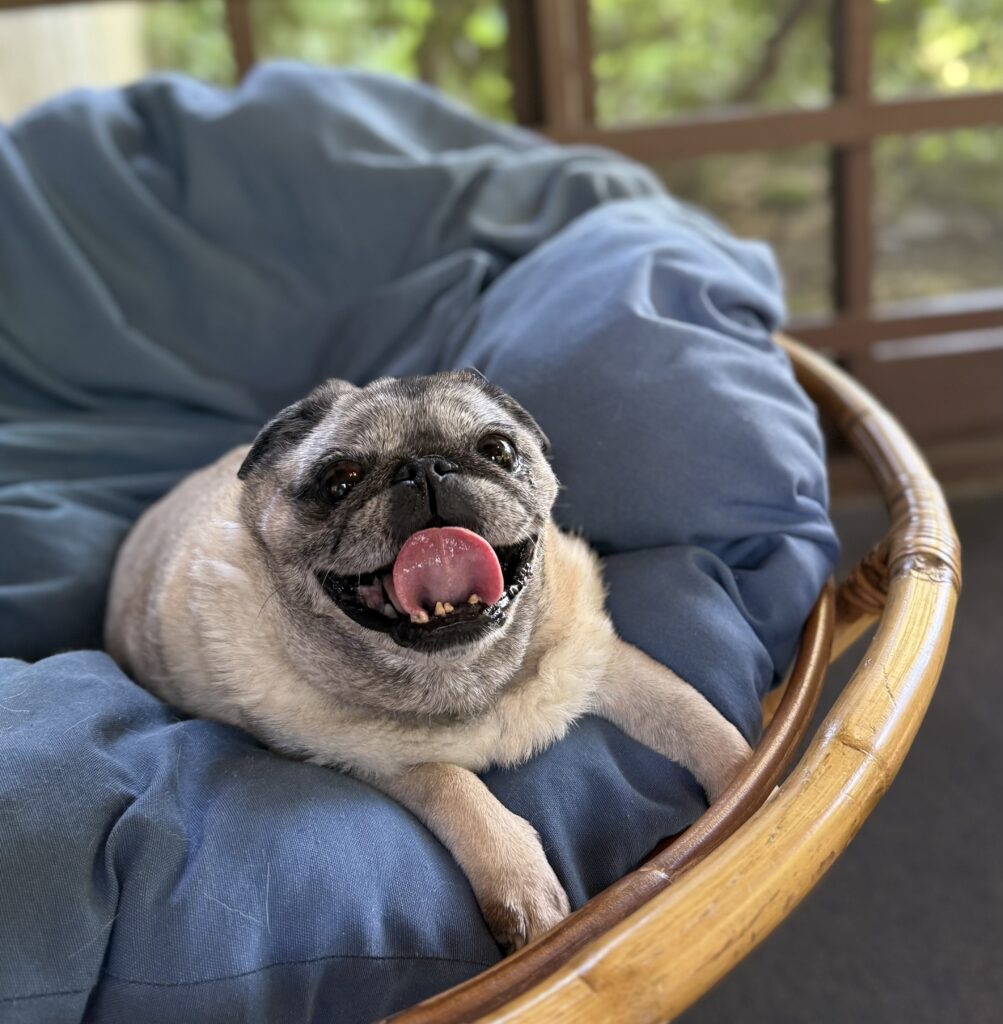
    This month, we’re celebrating the fun-loving mutts who make our lives brighter all year long. Here are a handful of our favorites, with interesting details about each from their owner:

    Dog: Rugby

    Nickname: Rug Bug the Love Bug, Rugger

    Owner: Leanne Politi

    From Leanne: We adopted Rugby—named after Rugby the Tiger from Jim Henson’s The Christmas Toy—as a 10-week-old puppy on June 10, 2017, and he quickly grew into an 80-lb bundle of equal parts love and mischief.

    A mix of coonhound and retriever, Rugby has an incredible prey drive. If (when) he ever gets loose and spots a rabbit or deer, he’s off on a hunting expedition that can last an hour—or three. Everyone in the neighborhood knows Rugby and has learned to tolerate his occasional antics because, beneath the troublemaking is the sweetest dog you’ll ever meet. We call him my “Velcro dog” because he insists on being as close to me as possible at all times. His favorite thing to do is rest one paw on my foot while I’m washing dishes, just to make sure I’m nearby.

    Also, many people at Martin already know Rugby from his frequent appearances on our weekly Teams calls, always eager to be part of the action.

    In my opinion, he’s the best dog ever—and also the most handsome dog around.

    Dog: Montepulciano

    Nickname: Monte

    Owner: Bayley Ward

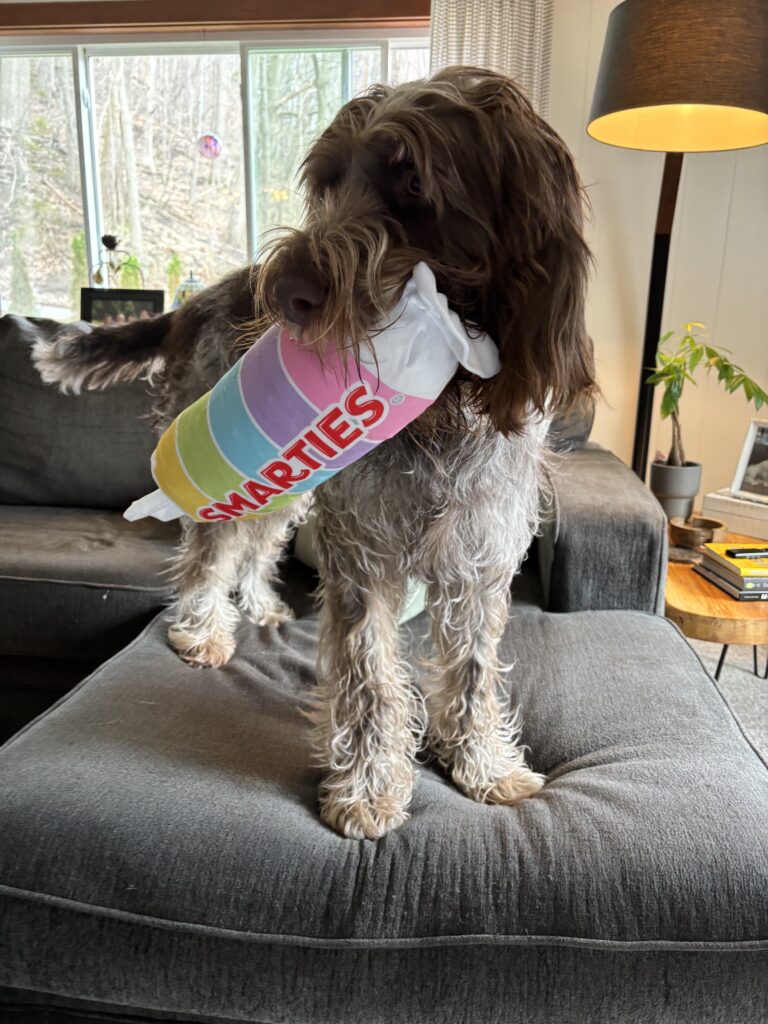
    From Bayley: Monte is a one-year-old Italian Spinone, and we named him Montepulciano after our favorite red wine and region in Italy. Monte is a birding dog that does not bird, but stalks them daily in our backyard as if he knows what he is doing. He does not bark, only in his very aggressive dreams as he sleeps on his back with all four paws in the air. He has giant paws that he uses to smack people (and his sister) with. It’s very innocent but he loves to throw a paw and hold hands.

    Monte also drools unlike any dog I have ever seen. He goes to our longtime friend and groomer in Fairport and during a recent appointment, shook his head to send a very long drool strand right across our friend’s face and cheek.

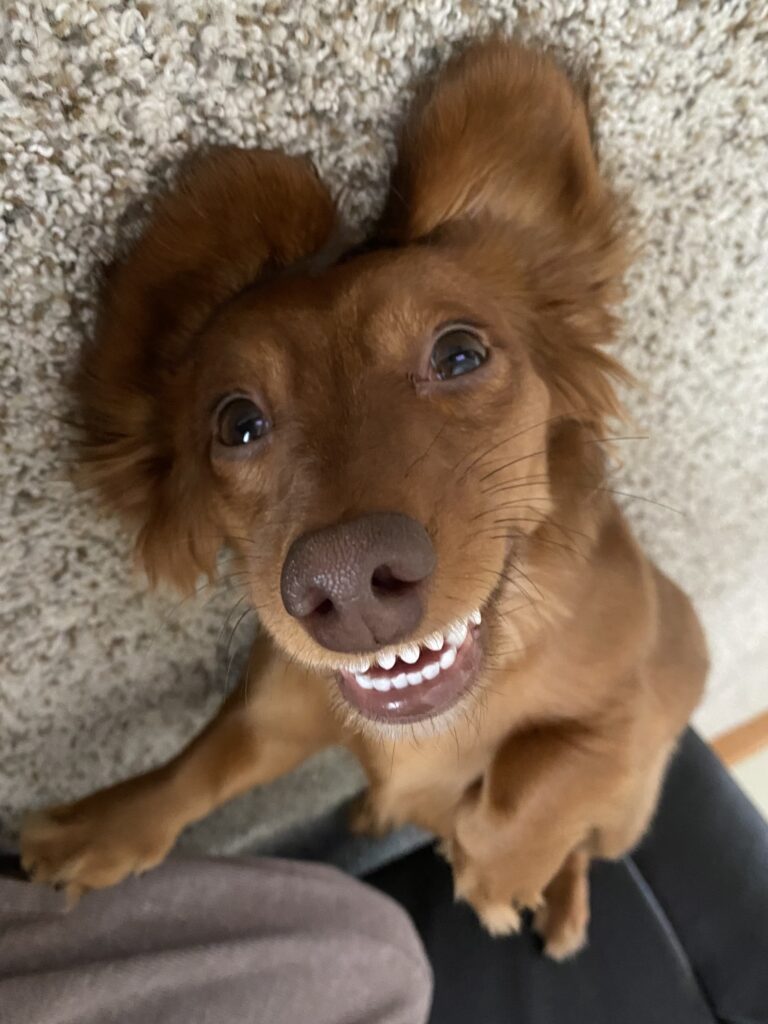
    Dog: Khloe

    Nickname: Miss Ween

    Owner: Jim Lynch

    From Jim: Khloe is a miniature dachshund AND a COVID dog, as we got her about two months into the pandemic (in May 2020). Our previous dog passed away just months before, and we swore we’d never get another dog. But after our daughter, Taylor, convinced us to get another one, we found “Miss Ween,” whose grown weight is about 13 pounds.

    And in typical dachshund fashion, she literally barks at everything.

    Dog: Casper

    Nickname(s): Cassie, Birdie

    Owner: Lindsay Neilson

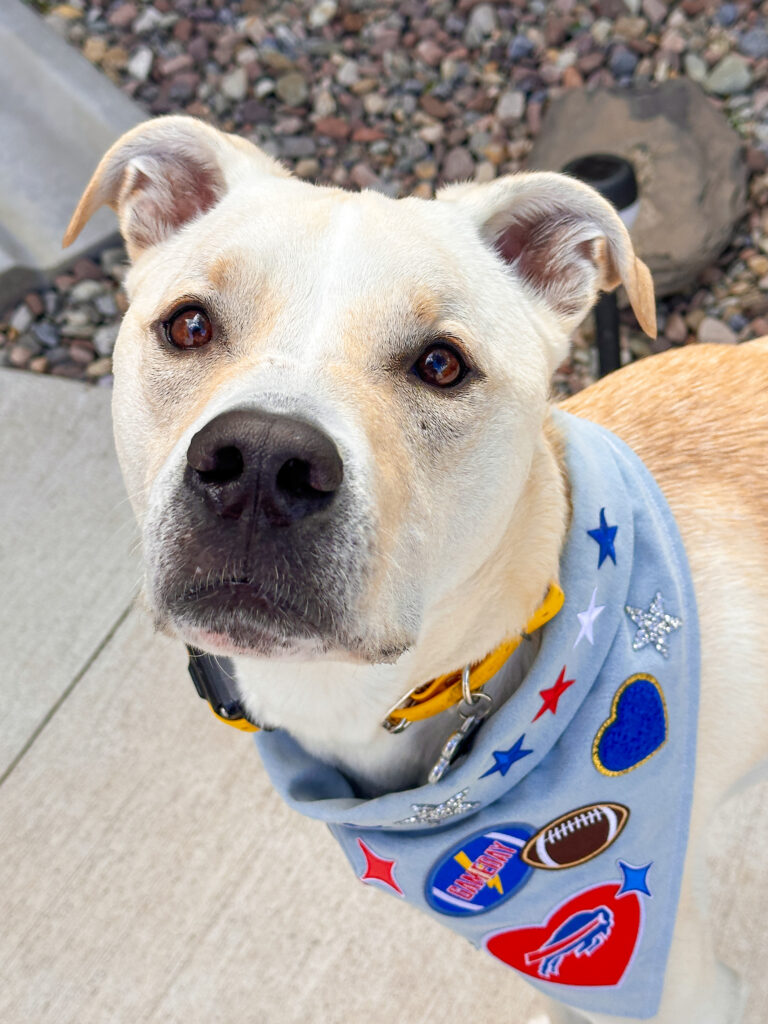
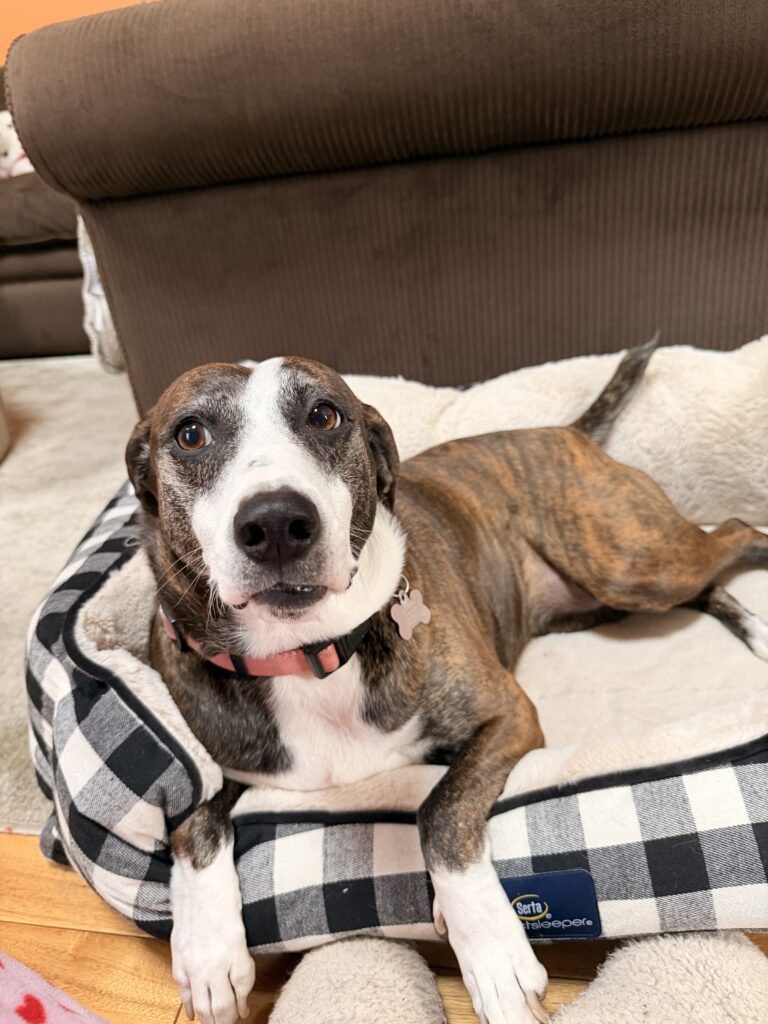
    From Lindsay: We rescued Casper in April 2022 through Buffalo Underdogs Rescue. He was found during a drug raid and had experienced a lot of trauma. But from the moment we met him, we knew he was meant to be part of our family.

    Ever since we got him, he’s been living his best spoiled life. His favorite things include being a 65-pound lap dog, going on hikes, playing with his foster siblings, eating all the lettuce, rooting for the Ruffalo Rills (aka the Buffalo Bills), and serving as the self-appointed neighborhood watchdog. He’s also somehow managed to witness more natural wonders than most people, such as the Northern Lights three times and a total solar eclipse.

    One of my absolute favorite Casper quirks is how he sleeps. He’ll roll onto his back and stick at least one of his paws straight up in the air. Don’t know how comfortable it is, but he loves it.

    Dog: Daisy

    Nickname: Daisy Dora

    Owner: Jenny LePore

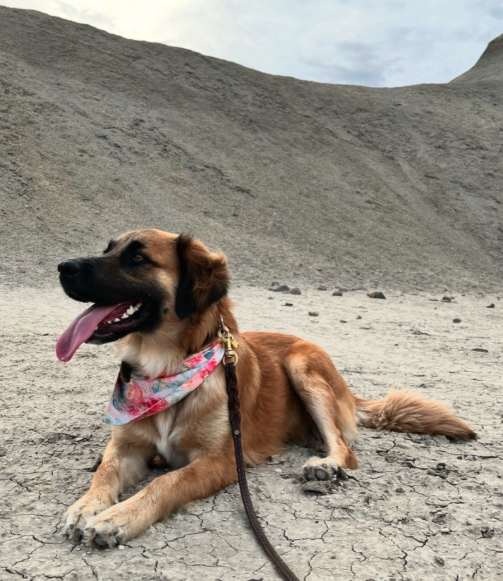
    From Jenny: Daisy is our Golden Anatolian Shepherd, adopted from a rural Texas shelter. She traded stray life for a forever family and has been making up for lost time ever since.

    She now holds several important positions: official mascot for our Girl Scout troop and softball team, Director of Backyard Security, and Senior Supervisor of Neighborhood Kid Activities. If the kids wander too far, Daisy promptly escorts them back. She’s also an experienced traveler, having RV’d to Big Bend, hiked the Hoodoos Trail, sunbathed in the Chihuahuan Desert, and dipped her paws in the Rio Grande.

    When not on the road, most weekdays are spent supervising Mom’s remote calls—though she frequently requests time off for doggy daycare.

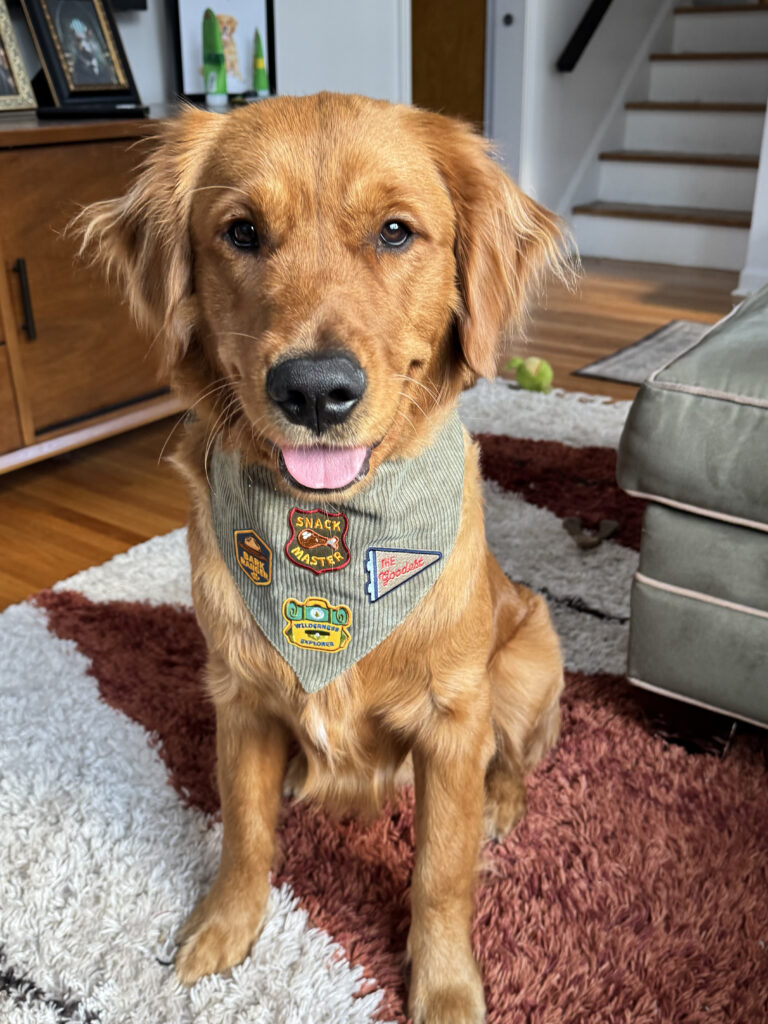
    Dog: Benny

    Nickname(s): Benny Beans, B-Boy

    Owner: Ashlee Bueg

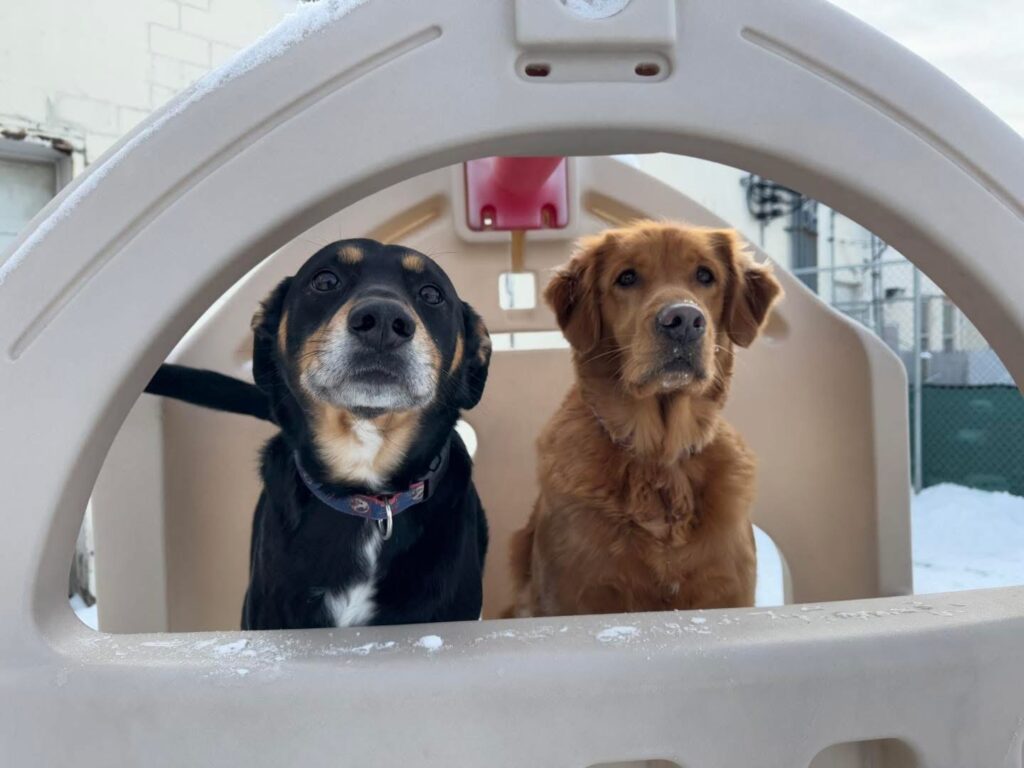
    From Ashlee: As a high-energy, loving goober, Benny is a typical Field Golden Retriever. He turned one in April, and loves long walks, sticks, water, snow, grass, rolling on smelly things, playfully attacking feet, treats, destroying toys, and giving out free kisses.

    He went to Maine for the first time this year and, in turn, learned that he loves lobster—and that the spicy water (salt water) is not for him!

    Dog: Nash

    Nickname(s): Nashy, Nashy Pants

    Owner: Natalie Opp

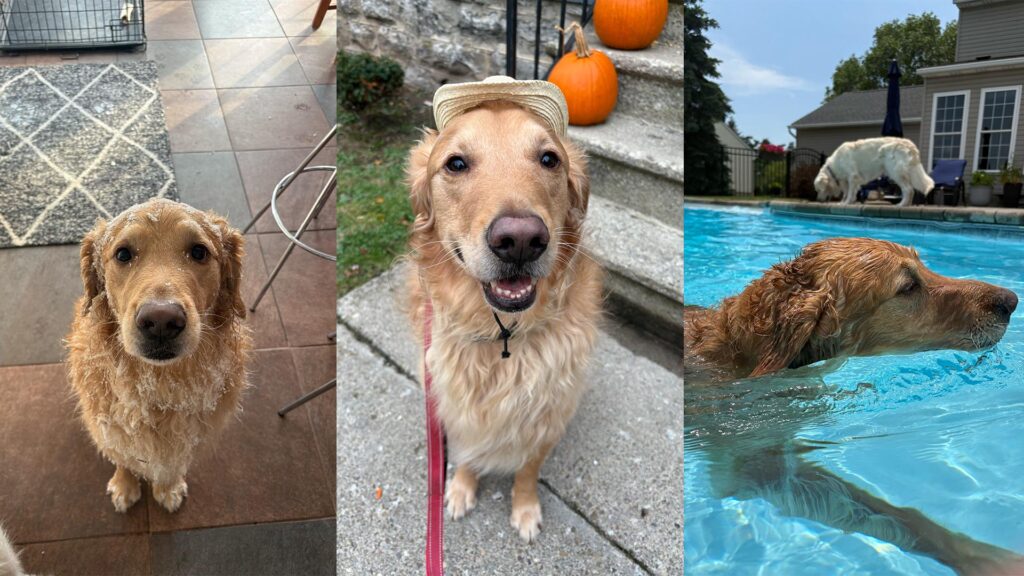
    From Natalie: Nash is a six-year-old Golden Retriever who joined our family as a COVID puppy.

    His favorite hobby is convincing everyone to pet him, and he truly believes there is no such thing as too much attention. When he’s not asking for belly rubs, you can usually find him rolling around in the snow, swimming at his grandparents’ house, or playing with his Uncle Ryder, another Golden Retriever. Whenever Nash goes swimming, he smacks the water with his paws as if he can actually catch the splashes, and he never seems to realize that the water always wins. He also loves going for walks, where he proudly searches for the biggest stick he can possibly carry, even if it’s twice his size.

    Life with Nash is never boring, and his goofy personality and endless affection make every day a little more fun.

    Dog: Snoopy

    Nickname: Spoon, Snoop-a-loop

    Owner: Jessie Lewis

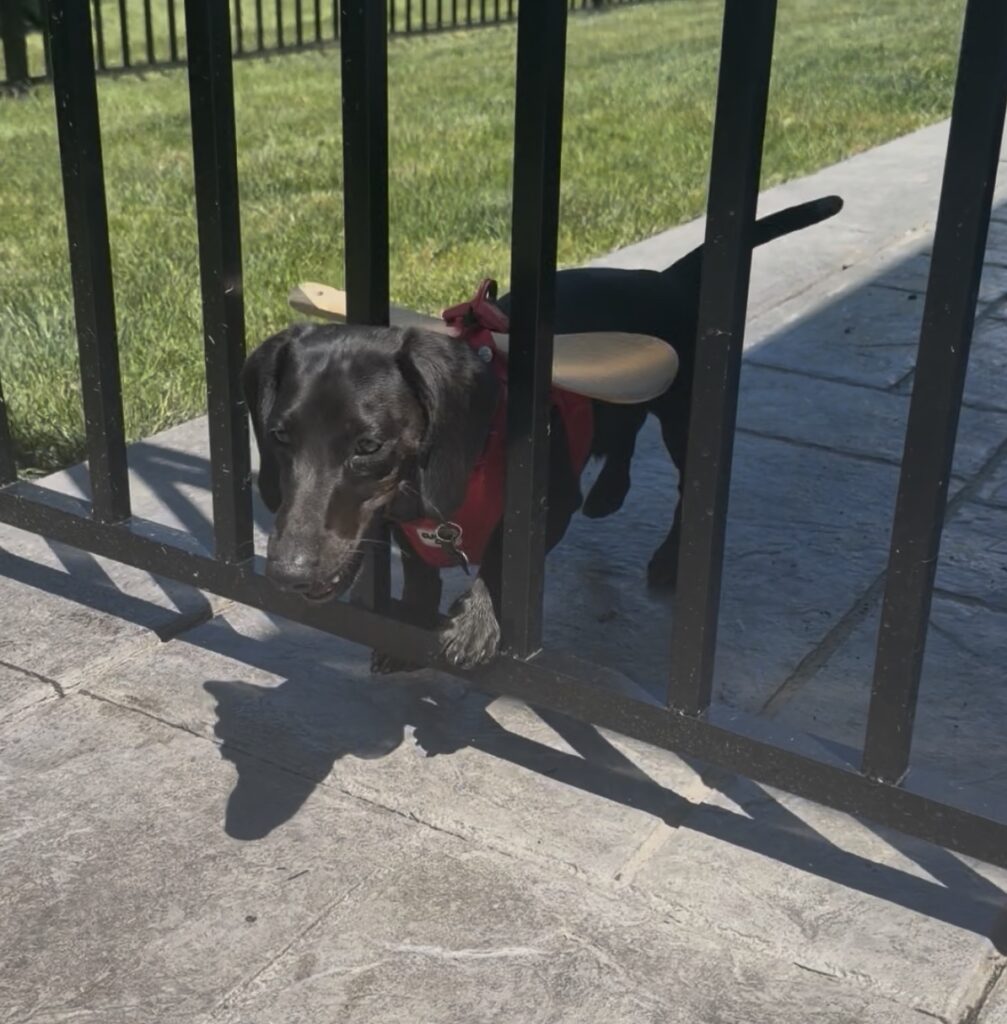
    From Jessie: Snoopy is a 10-lb, one-year-old miniature dachshund—who somehow believes he’s an escape artist.

    He’s just small enough to squeeze through the bars of our black metal fence, so after a few successful jailbreaks, we had to get creative. Our solution? A wooden spoon zip-tied to the back of his harness. It catches on the fence before he can slip through, stopping his great escape before it starts. It looks absolutely ridiculous, gets a laugh from everyone who sees it, and somehow works better than anything else we tried.

    Snoopy may be tiny, stubborn, and determined to explore the neighborhood, but for now, the wooden spoon has finally outsmarted him.

    Dog: Gus

    Nickname: Gustavo, Gus Bus

    Owner: Mike Martin

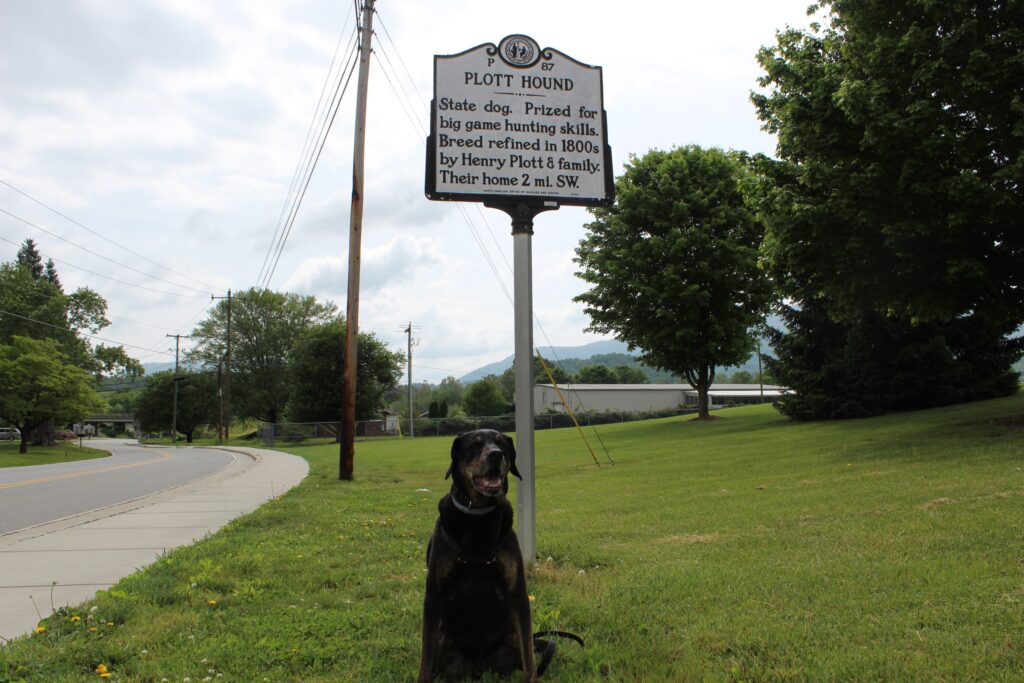
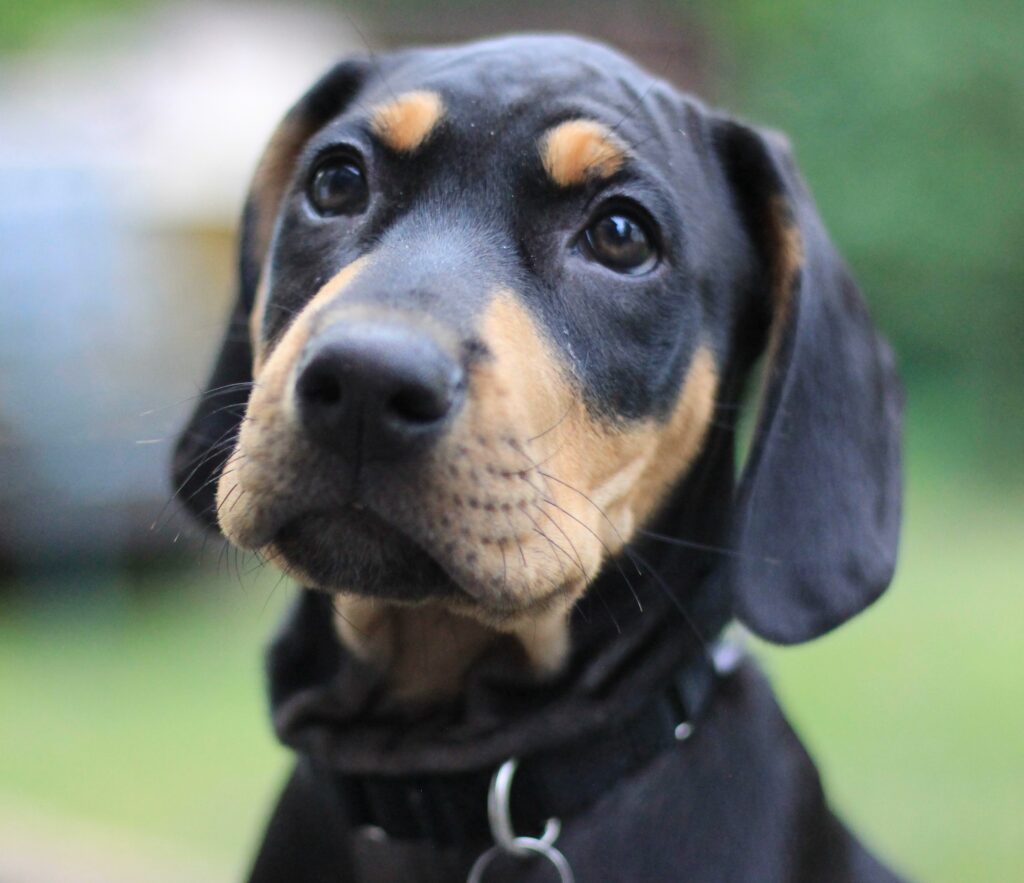
    From Mike: After adopting Gus in 2020, I learned the Plott Hound actually had a role in American expansionism. Johannes Plott brought his bear hunting hounds to modern day Western North Carolina in the 1750s from Germany and maintained a wide plot (pun intended) of land for generations.

    In the 2000s, the Plott Hound was named the state dog of North Carolina by order of the legislature, and the small town of Maggie Valley, NC has a street marker acknowledging this recognition. I packed up the truck and took Gus down to see this a few years ago and was shocked to be stopped by residents and families everywhere we went asking if he was a Plott and telling us about the breed’s lineage. As we were about to leave town, Gus was treated to a BBQ dinner from a local restaurant who proudly showed us this statue of a Plott Hound outside his restaurant.

    Safe to say Gus has been wanting to go back ever since, as his celebrity isn’t as appreciated in Albany.

    Dog(s): Emma and Hank

    Nickname(s): Emma Lou and Henry

    Owner: Andi Ridge

    From Andi: Both of our dogs are rescues. My husband got Hank in 2019, and I got Emma in 2021. Emma is a true golden retriever, and she’s every bit the attention lover you’d expect, though there’s a little diva in her, too: stubborn, opinionated, and firmly convinced things should be done her way. Hank is a shepherd mix. He’s just happy to be here. Give him the outdoors and a long walk and he’s a happy guy, though he’s also permanently on duty, patrolling the fence line or posted up at the window waiting for someone to walk by.  

    Also, both gained significant fame when their names and faces were used to identify our wedding’s signature drinks. “The Emma” was an espresso martini, and “The Hank” was a delicious Manhattan.

    Dog: Callie

    Nickname: Booger

    Owner: Grace Carra

    From Grace: Callie is the weirdest, most awkward dog I’ve ever met—and everyone who meets her agrees. She talks a lot. She likes attention, so when she’s not getting any, she makes extremely strange noises. I like to refer to them as “warbles.” Something funny she’s done? Simply existing. At times, she kind of sits up like a human.

    She is my constant source of entertainment. She rarely settles down, and her warbles are quite constant.

    Dog: Stella

    Nickname: Stella Bella, Meatball

    Owner: John Jiloty

    From John: While we certainly love Murphy, our two-year-old Irish Doodle, the OG, Stella, set the bar pretty high. Originally a city dog who banged out miles at a time in Baltimore’s Inner Harbor, hiked Adirondack High Peaks on vacation, and was a surprisingly good swimmer, the little meatball settled into country life pretty comfortably after moving to Western New York. Always a traffic-stopper wherever we went, in her later years Stella would line up at our oldest daughter’s door every night waiting to sleep in her bed—which was a nice evolution from when I used to wake up with her snoring next to me.

    She had a great run, and did an amazing job as the big sister—and guardian, face-licker, snuggler—to our two girls. RIP, Stella. 

    To learn more about our team at The Martin Group, click here.
  • Carver Companies

    You searched for new era cap – Page 15 of 32 – The Martin Group

    Challenge

    Carver Companies plays a critical role in New York’s Capital Region. As owner and operator of the Port of Coeymans, the company supports major infrastructure projects, marine transport, offshore wind manufacturing, and winter road safety operations. Despite decades of economic impact, Carver remained largely unknown to elected officials, business leaders, and regional media. When coverage did appear, it often amplified a small group of local detractors. That perception gap began threatening high-stakes, strategic-growth initiatives. Carver engaged The Martin Group to shift sentiment, establish credibility, and ensure its story was told with context and authority.

    Solution

    We identified a core issue: Carver had proof of impact but no sustained narrative presence. Our strategy centered on proactive relationship-building
    with mission-critical media outlets, including the Albany Times Union, Albany Business Review, and Ravena News-Herald. We secured executive interviews, negotiated exclusives, and positioned complex announcements to land as signals of growth rather than controversy. We activated around defining moments, such as the 370-nautical-mile Erie Canal transport of the Ralph Wilson Park pedestrian bridge. The Martin Group provided executive counsel, messaging development, spokesperson preparation, media tours, embargo management, award nominations, and on-site support, ensuring Carver’s expansion was framed within broader regional progress.

    Results

    In less than a year, Carver moved from reactive to respected. Coverage more than doubled year over year, with sentiment shifting decisively positive. Major infrastructure and energy stories ran prominently across regional broadcast, business, and daily outlets. Carver Companies now enters major public conversations with visibility, allies, and momentum.

  • She’s Got Next: Kendra Brim

    You searched for new era cap – Page 15 of 32 – The Martin Group

    For our latest installment of “She’s Got Next,” we spoke with Kendra Brim, a decorated athlete, coach, and community leader whose impact stretches far beyond the court. The all‑time leading scorer at Buffalo’s Nardin Academy, she led the Gators to a New York State Catholic Championship her senior year before continuing her career at Colgate, where she played four seasons for the Raiders and earned a degree in political science. She later completed her MBA at the University at Buffalo. After returning to Nardin as a coach for several seasons, Kendra was inducted into the school’s Athletic Hall of Fame in 2018.

    Today, she serves as the Vice President of Programs and Organizational Advancement at Leadership Buffalo and runs her consulting firm, Out of Bounds, which supports student‑athletes and former athletes as they navigate identity, transition, and life beyond the game. 

    The following conversation is edited for space and clarity.

    As someone who works at the intersection of leadership, development, and athletics, what lessons from your playing career most influence how you lead today?

    The way I lead today is not necessarily leading from the front. One of the things I always talk about is, back when I was in high school and coaching from the sidelines due to an injury, I learned that everyone has a role to play. That’s something that I learned about and now talk about in leadership development—everyone has a role.

    There are people who are leaders in their own right, but not while leading from the front. The most powerful leaders can emerge from anywhere, and it’s really important to understand where you fit in. Are you a person of influence? Are you a person who leads from the front? Are you a person that’s a quiet changemaker?

    It’s really important to know who you are as a leader, play your role, and play it well.

    From your perspective, how are organizations in Western New York leading when it comes to supporting girls’ and women’s sports; and where is there room for growth?

    You now see support for girls’ and women’s sports everywhere across Western New York.

    You’re seeing an overall empowerment of these sports, and that’s a great thing to see. When it comes to growth, access is really important, but so is putting money towards some of these sports and programs. Making sure you have a leadership development component in place for players to support growth is important, too. I think that’s the part that’s missing.

    There are some great initiatives that are happening, with Project Play of Western New York being a big one. They’re doing a terrific job of not just making sure there’s access for students, but addressing how coaches need to coach, how parents need to support their children and more. Everybody has a part to play in this, so addressing how everyone shows up and are the best they can be helps to make sure that, ultimately, the students are the ones who are winning in this space.

    Across the current sports landscape, it seems if you want to make a real impact on young athletes and their communities, investing in programs like Project Play and others is the way to go. Do you agree? 

    Yes. It’s a more grassroots way of doing it, and the people who come to the table are everyone I just mentioned. You have players, former players, coaches, and parents, and you have foundations that are at the crux of it all as well. The Community Foundation supports Project Play of Western New York.

    The Police Athletic League is also doing an amazing job. The Police Athletic League is an organization I volunteer with frequently and do a lot of consulting with as well. I’m a PAL kid; that’s how I started to play basketball. I was exposed to a lot of different things through PAL, but throughout the years, they realized that playing sports just wasn’t enough. Now, they have a workforce development component. They have sports sampling so kids can sample different sports that they may be interested in. They’re developing the full student-athlete, so continuing to invest in programs like PAL is really important, especially as these nonprofits and third spaces are being stripped of funding at the national and the local level as well.

    In addition, we need to continue to make sure that these spaces are safe and accessible to children, parents, and families. That’s going to help continue to build the ecosystem of sports and women’s sports, specifically.

    Women’s sports right now are having a pretty big cultural moment. What do you think brands, marketing efforts, or organizations often misunderstand about engaging authentically with women’s sports audiences?

    I love that we’re having this cultural moment. It makes me proud. I’m excited; I’m happy. I got my tickets for the Toronto Tempo—which is the new WNBA team that’s coming to this area—so I’m really excited for the branding of women’s sports. WNBA is now called the W, and so it’s a recognized household brand, where before it was not.

    What I believe they are missing from this moment is access. I remember when I went to my first WNBA game with my dad in Detroit. I think it was like, “Daddy and Daughter Day” or something, which made it very accessible and family oriented. Now, if I wanted to go buy a seat for a game in some places, it’s $500 for one ticket. The WNBA has become so big a name that people have to decide if they’re going to buy a ticket, or sometimes, if they’re going to buy food. I think that’s the reality of it.

    I don’t have a solution for what the balance looks like, because we know that WNBA has to be revenue-generating. They just earned a huge contract for their players, which is really important—especially with the revenue-sharing piece of it. But how do we make sure the product is accessible so that, when girls or guys or families want to go to the game they can attend without breaking the bank? That’s the issue with a lot of sports, right? We all go to Bills games, and now that the Sabres are in the playoffs, we’re paying $300-$400 for those tickets.

    But I think as the popularity of women’s sports continue to grow, how do we make sure that that they’re still accessible so the community can join in on the action? That’s the question we need to answer.

    You found Out of Bounds to help athletes navigate identity beyond sports. What trends are you seeing right now concerning how young athletes understand or struggle with that transition?

    We now start to develop student-athletes early on, sometimes as early as four or five years old. Most of these kids have access to cell phones and social media, and so they’re seeing the flashiness of what it means to be an athlete, but they don’t necessarily see the grit and the grind behind being a student-athlete as well. You’re seeing where a lot of the kids are not being developed as a total student-athlete that way because they’re so focused on the highlight reel or getting to the next level, which is great—but it’s equally important to talk about what it means to get there.

    Leadership development, student development, mental health development, and the support of your family and community is also equally as important, so we have to continue to educate them on that and what that looks like. When it comes to student-athletes, they’re not being totally developed—but they need to be. It’s hard to teach this to students and young kids.

    Everybody knows Kobe Bryant—who’s one of my basketball heroes—and one of the things that he always talked about was the grind behind getting to where he is. He exposed this through his Olympics appearances, his writings, and many other ways. I feel like more athletes need to talk about that, because it’s not about the flashy highlight reel or the NIL deals. Let’s really talk about getting up at 5 a.m. when the alarm is going off and you’re not hitting snooze, or putting the cell phone down and actually working on your skills and craft.

    That’s not talked about often enough—and it needs to be.

    Ready for more She’s Got Next? Find the whole series here.