
She’s Got Next: Shannon Dan – The Martin Group
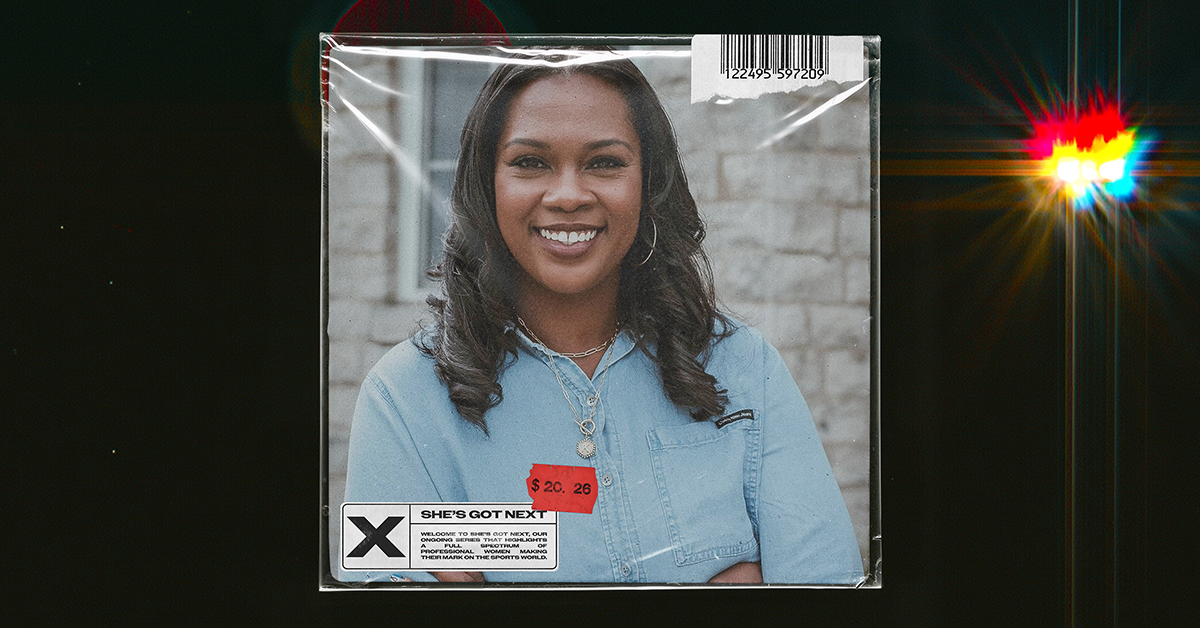
For our latest installment of “She’s Got Next,” we spoke with Shannon Dan, the EVP of Strategy & Growth at the Intersport-owned Association of Pickleball Players (APP), the first professional and amateur pickleball tour and the only tour officially sanctioned by the sport’s governing body, USA Pickleball.
Now in her 20th year with Intersport, Shannon focuses on the APP’s business strategy, growth initiatives, and new properties, such as the APP Selkirk Collegiate Series. She also leads market selection and scheduling for the APP Tour, which hosts more than 60 events annually, working with sports commissions, tourism groups, venues, and local partners to build events that truly become a staple in their local community and globally.
A graduate of St. Bonaventure University and former college basketball player, Shannon came to Intersport after spending five years in Public Relations/Communications at the NBA.
The following conversation is edited for space and clarity.
You started your journey in sports as a D1 basketball player with St. Bonaventure University. Looking back, how has that experience influenced the way that you approach the business side of sports?
I think playing basketball—especially at the D1 level—really shaped everything about how I work.
It taught me discipline and extreme time management, because once on campus, you learn very quickly how to balance academics, travel, practice and competition without lowering the standards in any of those areas. It also taught me how to lead, and perform under pressure. In sports and in basketball, the moment arrives when you feel ready or not. You have to make a decision; you have to make a play. You have to perform, regardless of the stakes.
As you advance in business, you can find yourself in a lot of high-stakes environments and high-pressure situations. And given my experience in sports, I feel like I can handle those with a calmness and composure that is hard to teach.
But those things are obvious, right? Probably a lot of athletes talk about that. One of the most important lessons that is perhaps less reflected on is what sports teaches you about collaborating with all different types of people. I talk to my kids about this a lot because they’re both athletes, and they have different teammates and classmates.
I’ve had really demanding coaches, and then later in my career, even more demanding bosses. I played alongside teammates with very different backgrounds, personalities, or ways of communicating, just as I have now worked with colleagues, clients, or partners with a wide range of perspectives and experiences.
Team sports taught me that I’m not naturally going to connect with everyone in the same way, but you also can’t expect everyone to think, communicate, or respond exactly as you do. But you learn to adapt, right? You learn to listen or when to speak up, how to understand what motivates different people, and how to adapt to different personality traits and communication styles.
But as long as you have a shared objective, you can figure out how to collaborate.
Your career at Intersport has evolved alongside several major shifts in sports media, digital content, and experiential marketing. Now, you’re helping to build professional pickleball. How have you learned to recognize when an emerging trend is worth jumping on—or when it’s something you want to stay away from?
It’s not an easy decision. There are like a lot of risks you take. Some of them are wins and some are losses.
But I’ve always been energized by the opportunity to build something from its earliest stages—even when those stages can be uncertain, stressful, and high-pressure. Sometimes, I question my sanity for always gravitating to these new capabilities or new businesses or new sports. In the case of pickleball, there’s something about helping shape the future and being a builder that really energizes me. There’s something in me that gets juice and energy out of those environments.
I’ve been at Intersport for 20 years. It’s such an entrepreneurial organization, and we can move quickly. We can test ideas, and we can accept a thoughtful amount of risk because we’re a smaller, more agile firm. Over the years, Intersport has had a lot of industry firsts. We produced March Madness video on mobile phones before the iPhone existed. We developed content for Facebook when there was really no video on Facebook, which is hard to believe now. We staged the first outdoor hockey event at Soldier Field. We’ve explored emerging technologies, new event formats, or more recently, professional pickleball, the fastest growing sport in the world.
But recognizing a trend isn’t about chasing down whatever is new. And there’s a lot of temptation to do that. We have people talking to us all the time because of how entrepreneurial we are about starting these new things. But what we look for is a real change in consumer behavior. We need to see a clear opportunity for either brands or media partners, and then some connection to the capabilities Intersport already possess.
That’s what attracted us to pickleball. We saw the changing consumer behavior, the massive participation spike unlike anything we’ve seen in sports. But we also saw a sport and a tour that needed exactly what Intersport excels at, like media distribution, marketing, brand building, and content and event production. It was a perfect fit, but it was a fit rooted in changing consumer behavior.
From your perspective, what does it take to transform the potential of a fast-growing activity like pickleball into something that is that is lasting?
With pickleball, participation is the foundation—and that foundation is truly extraordinary.
The sport is expanding so rapidly across continents around the world. There are 50 million Americans that have played the sport in the last 12 months, but there’s 812 million people in Asia that have played the sport in the past year. There’s 282 million that play it at least once a month. We see massive growth in Europe. We just held the English Open in partnership with Pickleball England and hosted 3,500 pro and amateur players, the largest indoor pickleball tournament of all time. There’s huge growth in Australia, so we’re seeing this participation growth everywhere. And again, it’s like unlike anything we’ve seen in sport.
But I think what has made its trajectory so unique is that it’s moved through three phases very quickly. People first discovered it around 2019, and in 2020-21, it absolutely exploded during COVID. But people discovered it and it became this movement communities organized around. Now, it’s very quickly becoming a commercial platform that brands and media and athletes and cities and international markets are building around—which is rare. That’s all happened very, very quickly.
Now, we’re at this inflection point for pickleball. The foundation of this high-growth participation matters because participation creates a national pathway to fandom. We’ve looked at a lot of data concerning people who play a sport and how much more likely they are to become a fan of that sport. With sports like professional golf and tennis, those that played golf or tennis growing up are four times more likely to be a fan of the PGA Tour, the LPGA Tour, ATP, and WTA. If girls and boys grow and develop within the sport of pickleball and learn the rules, they will become fans, they’ll buy tickets, they’ll buy merchandise, they’ll watch on TV. They’ll post on social.
It’s exactly why the NFL has invested so heavily in flag football. Because if girls and boys grow up playing the sport, they’ll better understand the game, and be more likely to become fans.
There are a couple elements that point to positive signs that pickleball will become a mainstream viewership and spectator sport. And with a base of 50 million Americans and a billion people around the world playing the sport, that’s an incredible foundation of people that can become fans.
But to your point, the challenge and opportunity is turning that personal connection of the sport into a sustained interest in the professional game. That will take a little time and requires compelling elements like player storytelling, meaningful rivalries, statistics to show audiences that the top players are truly world-class athletes.
After all, any connection to a lasting professional sport needs to be built by giving fans a reason to care about the athletes and the outcome, not just the activity or participation itself.
You’ve had experience forming partnerships. What separates a sponsorship that simply puts a logo on an event and one that helps grow the sport and benefits the brand?
I love talking about this related to pickleball. We’re in a time in the sport where so many storylines—like how the sport is presented and how brands are integrated into it—are still being shaped. There is a real opportunity for brands to be part of shaping the sport.
Other sports are pretty crowded from an inventory standpoint and share of voice, but there’s an opportunity in pickleball to really help improve the sport and shape how it’s presented to fans. The best partnerships begin with a shared objective, not a list of available assets. We all know a logo can create awareness, but that’s not going to create the relationship with the fan. For a meaningful partner, the opportunity is so great to identify something that the sport or its athletes or its fans genuinely need and delivering against that. This contribution in pickleball could be expanding access to play, or at our main tour events, improving the fan experience, helping share athlete stories, creating useful content, and introducing the sport to a new audience.
That’s when sponsorship can really become a growth engine. It’s when you have a shared objective, you find a problem to solve or something that the sport really needs, and then use your sponsorship to address it.
Women’s leadership in sports has become more visible—but visibility is not the same as influence. Where have you seen meaningful progress when it comes to women leadership in sports, and where do you think there’s still work to do?
I’ve obviously seen such meaningful progress in the visibility of women in my 25-year career, but I think the next stage is about the breadth of opportunities that women receive.
Women should not just be viewed as the natural choice to lead in women’s sports or women-focused marketing or diversity initiatives. They should be running major properties and negotiating media agreements and overseeing revenue, managing investments, shaping the strategy of organizations—but they need access to the experience that positions them for those jobs. I’ve been very lucky in my career to have leaders—all male leaders actually—within my organization that put me in these types of roles along the way. And in most cases, each came well before I was ready. I did my part to be elevated within the organization, but it took access and sponsorship to get those opportunities.
One thing basketball taught me is that confidence often follows opportunity. It doesn’t always precede it. A coach can prepare a player, but at some point, that player has to be put in the game and trusted in an important moment. I think the same principle applies to women’s leadership. That’s what needs to be unlocked. That’s how potential turns into experience, and then experience turns into confidence for young leaders.
Women’s sports provides a useful lesson. For years, the industry always treated women’s sports growth as a demand problem. Now, we’re seeing that when the investment, media coverage, and storytelling improve, audiences improve—and audiences respond. Leadership works similarly. Talent is not the constraint—it’s opportunity and access that will create the real change.
Overall, I’m encouraged by the process. It has come so far since I left those halls of St. Bonaventure, but I look beyond representation. It’s about giving women the ball. Give women the ball and give them ownership of revenue, responsibility, and key business decisions. That’s when I think we’ll see real change.
Ready for more She’s Got Next? Find the whole series here.