She’s Got Next: Kendra Brim – The Martin Group
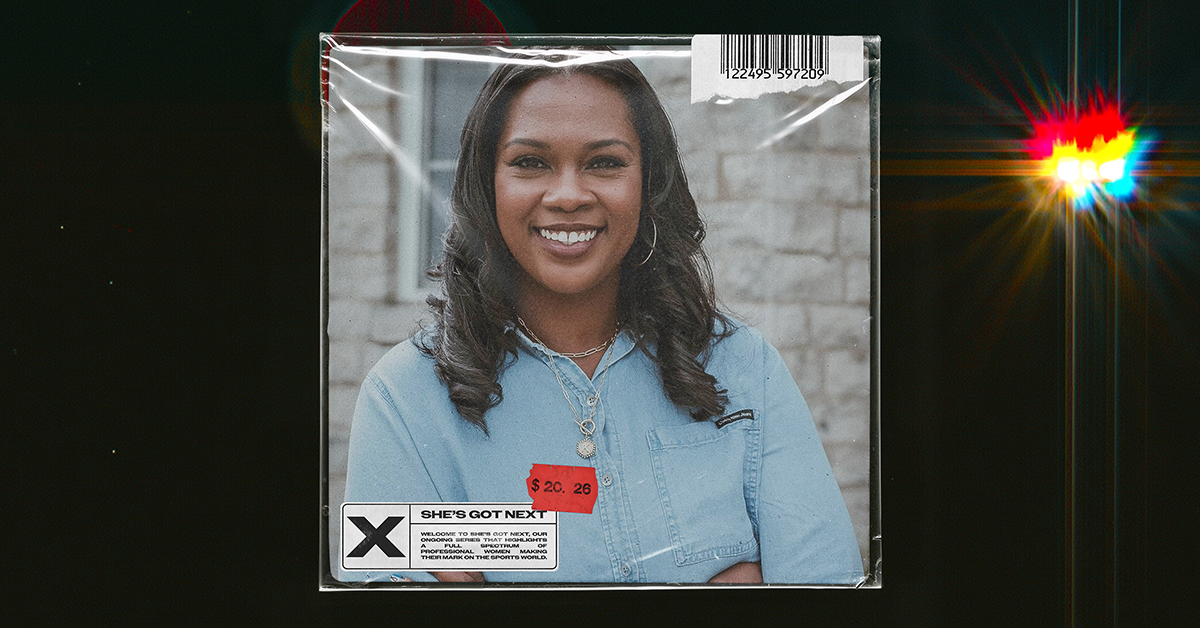
For our latest installment of “She’s Got Next,” we spoke with Kendra Brim, a decorated athlete, coach, and community leader whose impact stretches far beyond the court. The all‑time leading scorer at Buffalo’s Nardin Academy, she led the Gators to a New York State Catholic Championship her senior year before continuing her career at Colgate, where she played four seasons for the Raiders and earned a degree in political science. She later completed her MBA at the University at Buffalo. After returning to Nardin as a coach for several seasons, Kendra was inducted into the school’s Athletic Hall of Fame in 2018.
Today, she serves as the Vice President of Programs and Organizational Advancement at Leadership Buffalo and runs her consulting firm, Out of Bounds, which supports student‑athletes and former athletes as they navigate identity, transition, and life beyond the game.
The following conversation is edited for space and clarity.
As someone who works at the intersection of leadership, development, and athletics, what lessons from your playing career most influence how you lead today?
The way I lead today is not necessarily leading from the front. One of the things I always talk about is, back when I was in high school and coaching from the sidelines due to an injury, I learned that everyone has a role to play. That’s something that I learned about and now talk about in leadership development—everyone has a role.
There are people who are leaders in their own right, but not while leading from the front. The most powerful leaders can emerge from anywhere, and it’s really important to understand where you fit in. Are you a person of influence? Are you a person who leads from the front? Are you a person that’s a quiet changemaker?
It’s really important to know who you are as a leader, play your role, and play it well.
From your perspective, how are organizations in Western New York leading when it comes to supporting girls’ and women’s sports; and where is there room for growth?
You now see support for girls’ and women’s sports everywhere across Western New York.
You’re seeing an overall empowerment of these sports, and that’s a great thing to see. When it comes to growth, access is really important, but so is putting money towards some of these sports and programs. Making sure you have a leadership development component in place for players to support growth is important, too. I think that’s the part that’s missing.
There are some great initiatives that are happening, with Project Play of Western New York being a big one. They’re doing a terrific job of not just making sure there’s access for students, but addressing how coaches need to coach, how parents need to support their children and more. Everybody has a part to play in this, so addressing how everyone shows up and are the best they can be helps to make sure that, ultimately, the students are the ones who are winning in this space.
Across the current sports landscape, it seems if you want to make a real impact on young athletes and their communities, investing in programs like Project Play and others is the way to go. Do you agree?
Yes. It’s a more grassroots way of doing it, and the people who come to the table are everyone I just mentioned. You have players, former players, coaches, and parents, and you have foundations that are at the crux of it all as well. The Community Foundation supports Project Play of Western New York.
The Police Athletic League is also doing an amazing job. The Police Athletic League is an organization I volunteer with frequently and do a lot of consulting with as well. I’m a PAL kid; that’s how I started to play basketball. I was exposed to a lot of different things through PAL, but throughout the years, they realized that playing sports just wasn’t enough. Now, they have a workforce development component. They have sports sampling so kids can sample different sports that they may be interested in. They’re developing the full student-athlete, so continuing to invest in programs like PAL is really important, especially as these nonprofits and third spaces are being stripped of funding at the national and the local level as well.
In addition, we need to continue to make sure that these spaces are safe and accessible to children, parents, and families. That’s going to help continue to build the ecosystem of sports and women’s sports, specifically.
Women’s sports right now are having a pretty big cultural moment. What do you think brands, marketing efforts, or organizations often misunderstand about engaging authentically with women’s sports audiences?
I love that we’re having this cultural moment. It makes me proud. I’m excited; I’m happy. I got my tickets for the Toronto Tempo—which is the new WNBA team that’s coming to this area—so I’m really excited for the branding of women’s sports. WNBA is now called the W, and so it’s a recognized household brand, where before it was not.
What I believe they are missing from this moment is access. I remember when I went to my first WNBA game with my dad in Detroit. I think it was like, “Daddy and Daughter Day” or something, which made it very accessible and family oriented. Now, if I wanted to go buy a seat for a game in some places, it’s $500 for one ticket. The WNBA has become so big a name that people have to decide if they’re going to buy a ticket, or sometimes, if they’re going to buy food. I think that’s the reality of it.
I don’t have a solution for what the balance looks like, because we know that WNBA has to be revenue-generating. They just earned a huge contract for their players, which is really important—especially with the revenue-sharing piece of it. But how do we make sure the product is accessible so that, when girls or guys or families want to go to the game they can attend without breaking the bank? That’s the issue with a lot of sports, right? We all go to Bills games, and now that the Sabres are in the playoffs, we’re paying $300-$400 for those tickets.
But I think as the popularity of women’s sports continue to grow, how do we make sure that that they’re still accessible so the community can join in on the action? That’s the question we need to answer.
You found Out of Bounds to help athletes navigate identity beyond sports. What trends are you seeing right now concerning how young athletes understand or struggle with that transition?
We now start to develop student-athletes early on, sometimes as early as four or five years old. Most of these kids have access to cell phones and social media, and so they’re seeing the flashiness of what it means to be an athlete, but they don’t necessarily see the grit and the grind behind being a student-athlete as well. You’re seeing where a lot of the kids are not being developed as a total student-athlete that way because they’re so focused on the highlight reel or getting to the next level, which is great—but it’s equally important to talk about what it means to get there.
Leadership development, student development, mental health development, and the support of your family and community is also equally as important, so we have to continue to educate them on that and what that looks like. When it comes to student-athletes, they’re not being totally developed—but they need to be. It’s hard to teach this to students and young kids.
Everybody knows Kobe Bryant—who’s one of my basketball heroes—and one of the things that he always talked about was the grind behind getting to where he is. He exposed this through his Olympics appearances, his writings, and many other ways. I feel like more athletes need to talk about that, because it’s not about the flashy highlight reel or the NIL deals. Let’s really talk about getting up at 5 a.m. when the alarm is going off and you’re not hitting snooze, or putting the cell phone down and actually working on your skills and craft.
That’s not talked about often enough—and it needs to be.
Ready for more She’s Got Next? Find the whole series here.