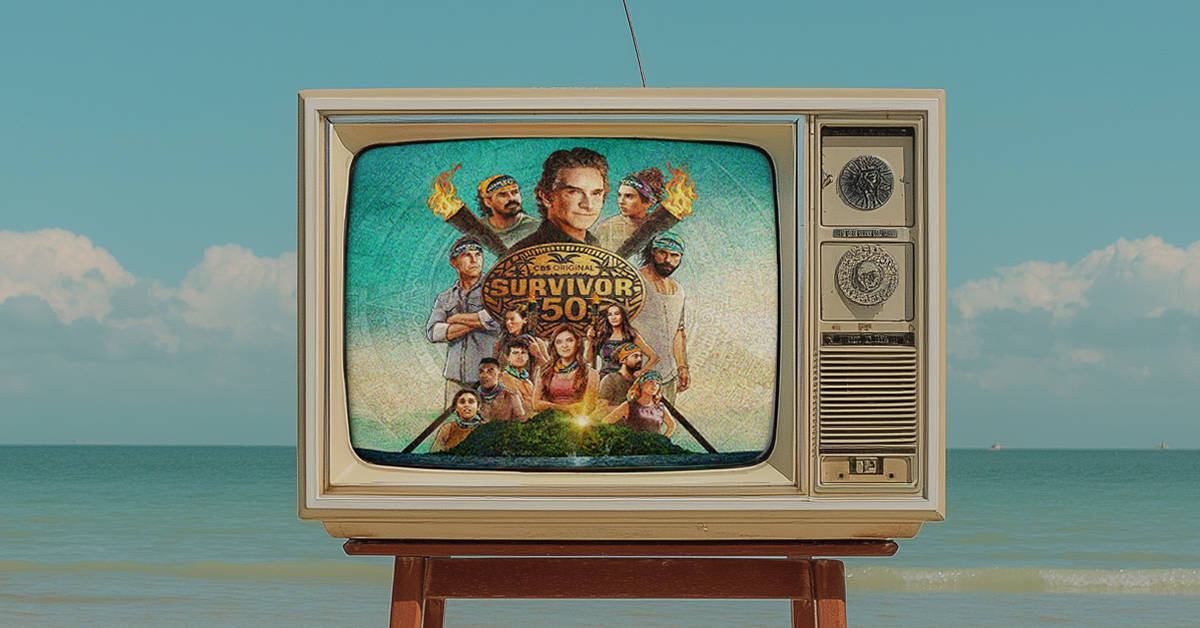

The tribe has spoken: Lessons for communicators from 50 seasons of “Survivor” – The Martin Group
I’ve spent way too much time thinking about the long-running CBS show “Survivor.”
You know the one: contestants are left to fend for themselves in a remote part of the world, voting each other off one by one, with a jury of their peers ultimately deciding who wins the title of Sole Survivor—and the $1 million prize that goes along with it.
It makes sense. I’m a communicator. Remove the survival elements—building shelter, catching fish, sleeping in the rain—and the actual game reveals itself as a communications case study. Reading people, managing trust, choosing the right moment with the right message, staying calm amid chaos. It’s all central to winning the million.
The pattern goes all the way back to the beginning. Richard Hatch, a corporate communications consultant, won the first season in 2000 by understanding before anyone else that the game wasn’t at all about wilderness skills.
Twenty-six years later, that still tracks. Savannah Louie, the most recent winner, is a former broadcast journalist. Rick Devens, a returning Season 50 player, spent years as a news anchor before becoming a director of communications in higher education. Rob Cesternino, often described as one of the smartest players never to win, turned his feel for storytelling into a reality TV podcast network with a massive, loyal following.
None of this is accidental. “Survivor” is a social experiment where information is currency, trust is fragile, and narratives change daily. That’s communications.
Season 50, airing now, has been an especially good reminder.
Crisis communications: Don’t let your reaction become the story
Cirie Fields is one of the most respected social players in “Survivor” history, famous for controlling alliances (and votes!) without appearing to dominate them.
In Episode 9 of this season, a player brought Cirie information that could hurt her closest allies. The natural response would be to tense up, correct the record, get defensive, ask one question too many. But Cirie stayed composed, absorbed the information and let him keep talking. She then relayed the intel to her allies in open view. “Don’t react. Don’t do that smile [you do] either.”
In a game built to make people tired, hungry, and paranoid, a facial expression can do serious damage. Hesitation can be read as untrustworthiness. A rushed reassurance can make everyone more nervous.
Crisis communications is a similar ballgame. Someone gets bad news and immediately makes it worse. They send the knee-jerk email. They overexplain. They create more questions than answers.
Cirie’s lesson for communicators: when the stakes are big, composure is essential.
Executive presence: Authenticity demands self-awareness
Benjamin “Coach” Wade is one of the most recognizable characters in “Survivor” history. The Dragon Slayer. The philosopher-warrior.
You may love the act. (I do.) You may not. (My wife doesn’t.) Either way, you know when Coach is in the vicinity, and there is real value in that. In communications, we spend a lot of time helping leaders find their voice. Not the sanded-down version that sounds like it survived legal review. Their actual voice. The one with a point of view. The one people remember.
Coach has that. It’s paid off for him, too. As of the time of this writing, he’s gained the most Instagram followers of any Season 50 castmate — a platform he leverages for selling wares like nickname ceremonies and haiku collections.
But Season 50 also shows the risk of having a voice so distinctive that it starts to become a costume. If you cannot take the persona off, your voice can pull you back into old patterns, even when the situation calls for something different. He tried to pivot this season. Sadly, the Dragon Slayer reared its head before getting lopped off in the vote.
That is the part of “be authentic” that tends to get skipped. Authenticity is not the same as being unfiltered. Effective executive communication requires modulation. You need to know your voice, but you also need to know the room.
Reputation management: “Show, don’t tell” still resonates
Ozzy Lusth, another returning legend, came into Season 50 with a clear strategy: bench Ozzy and play more as Oscar. That meant less jungle superhero and more complete person. Less reliance on fishing, challenges and the old provider identity. More relationships, more trust and more willingness to play the game as it exists now.
And guess what? He’s stuck to it, and has played a great game.
That’s a reputation lesson hiding in plain sight. You can’t change how people see you by announcing a new version of yourself. You shift perception by showing: communicating change through tangible, concrete action.
Anyone can declare a new chapter. The real test comes when pressure hits and the old reflexes are right there waiting.
His conversation with Tiffany in Episode 8 added another layer. After voting for her the night before, he admitted writing her name down. It was pure trust repair: name the elephant in the room, own the awkwardness, and clear the air before suspicion hardens into something harder to manage. “If anyone is bold enough to come and tell me,” Tiff said in a confessional, “that means they really want to build some rapport with me.”
That was Oscar in action. He was showing a new version of himself, while delivering a secondary lesson: sometimes the thing everyone can feel hanging in the air needs to be said plainly.
Stakeholder communications: You’re never speaking to just one audience
Here’s a broader lesson. One reason “Survivor” is so useful as a communications case study is that almost no conversation has only one audience.
A player may be speaking to the person in front of them, but that is rarely where the message stops. An ally or foe will hear about it later. A voting bloc will interpret the tone. A future jury member will remember how it felt. The audience at home will turn five seconds of footage into a Reddit thread, while podcasters have a field day analyzing what it all meant to that person’s game.
Corporate communications works the same way, just with fewer buffs and a lot more forwarding. An internal memo rarely stays internal. A CEO statement written for employees could also be read by clients, reporters, recruits, board members, and competitors. A client conversation may solve the issue in front of you while quietly shaping whether they trust you with the next one.
That doesn’t mean you write for some imaginary “everyone.” That’s how you get mush. It means you need to think carefully about how messages move.
Persuasion: Winning the argument is not the same as moving people
Finally, it needs to be said: The strongest argument doesn’t always win. Not on “Survivor.” Not in a boardroom. Not in a client meeting. Not in the court of public opinion.
A good argument has structure, evidence, logic, and a clean conclusion. Persuasion calls for something more nuanced. It requires a read on what the other side is ready to hear. Do they need facts, reassurance, urgency, empathy, or room to save face?
A lot of smart players get this wrong. So do a lot of smart professionals. They add evidence when the real issue is trust. They keep proving they are right, then wonder why no one follows.
Are you trying to win the point, or are you trying to move the person? Communication is not just about making the case—it’s about making the case land.
Is that worth playing for?
I have no idea how long I’d last on “Survivor.” Some variables on the island you simply can’t control. But my communications background would give me a fighting chance.
After 50 seasons, the lessons are hard to miss: Stay composed when the situation gets tense. Craft a distinctive voice, but be careful not to let performance outrun purpose. Show, don’t tell. Think carefully about unintended audiences. And remember the power of persuasion.
That is “Survivor.” It’s also leadership, public relations, executive communications, client service and just about any work that depends on trust.
At The Martin Group, we help organizations and leaders navigate those exact moments: what to say, when to say it, who needs to hear it and how it’s likely to land. We don’t even need hidden immunity idols to get the job done.
If your team is working through a complicated message, a high-stakes moment or a room with more audiences than it first appears, we’d be glad to talk. Chris Colton is a public relations director at The Martin Group and leads the agency’s executive communications and content practice. He is also the creator of survivor-reference.com, a fan-led statistical companion to CBS’s long-running reality series “Survivor.”