Don’t do it: Tactics and trend traps to avoid in 2026 – The Martin Group
Over the past two months, magazines, websites, and agency blogs (see: this one) have been littered with trends set to take shape—and mold our many professional decisions—throughout 2026.
But sometimes, the clearest directive isn’t a suggestion of what to do—it’s an informed recommendation of what not to do.
This month, we asked some of The Martin Group’s departmental leaders about some of the things they’d advise our clients to avoid over the coming year. Some direction was simplistic; some came with a little complication and nuance; and the rest was about everyone’s favorite omnipresent boogeyman and/or best friend, artificial intelligence (AI).
Individually, each piece of advice provides specific direction for the operation of your business or organization throughout the coming months. Together, they could act as a roadmap away from pitfalls that could trip up your plans for a strong 2026 and, instead, put you in a stronger position to make this the year when everything falls into place.
Here is our list of don’ts as you plan what to do.
“Don’t let AI lower the bar for creativity.”
-Michael Tsanis, Senior Vice President, Creative
We’ve all seen the ads and videos that are clearly off in one way or another. What was limited mostly to our social feeds—and perhaps a quick-hit digital ad—is now more pervasive than that, and representative of what we’ll be encountering in the year(s) ahead as consumers and creators.
AI is an incredibly exciting tool with capabilities that are growing daily, and it opens up a ton of possibilities for us as marketers. But as is the case with all leaps forward in creative technology, AI still needs craft to guide it. And even though access to it is widely available, what sets good creative apart from bad creative hasn’t changed.
Foundational skills in storytelling, art, design, writing—and yes, creativity—are now more critical than ever. When AI is used as a tool and not a shortcut, the results can be impactful.
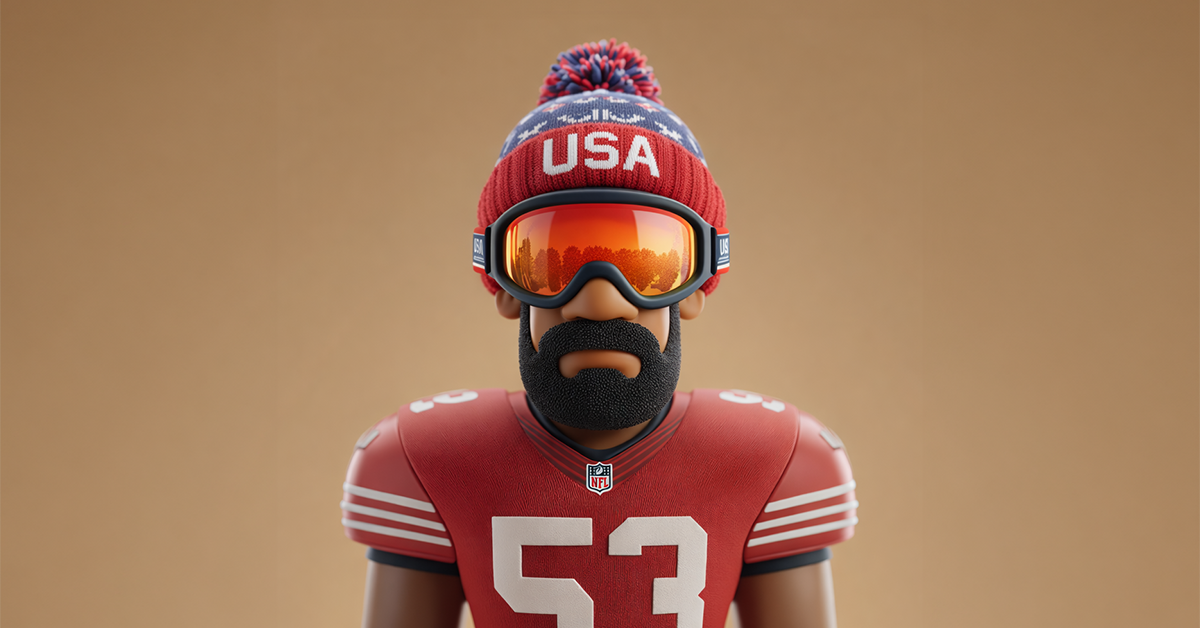
(To see how The Martin Group used AI as a tool to create a unique campaign for New Era Cap, click here.)
“Don’t expect attention without earning it.”
-Kate Measer, Director of Public Relations
One thing a company’s public relations strategy should not be is transactional. News coverage and community support don’t come from a single announcement or a one-off moment. You can’t send out a press release and assume media will show up just because the news feels important internally. And you can’t step into a community for one event or photo op and expect lasting engagement. That’s not how trust works.
The brands seeing real impact understand that PR is about relationships, not transactions. Journalists are partners, not distribution channels. Communities respond to consistency, not appearances. When you show up regularly, share useful stories, listen, and contribute beyond the spotlight moments, people will pay attention when it really matters. It’s about investing in relationships long before you need to activate them.
In 2026, there is an opportunity to think longer term. Build a PR plan that connects the dots over time, rather than relying on isolated tactics. When strategy leads and moments support it, coverage will be earned, participation will feel genuine, and your message will actually stick.
“Don’t confuse activity with strategy.”
-Dan Giacomini, Vice President, Strategy
Most of us have a busy marketing calendar, constant content output, or “always-on” tactics—but don’t mistake the regular juggling of these items for having a strategy.
In 2026, the temptation to keep feeding channels with a steady stream of content will be strong—especially with accessible AI making the creation of low-grade options easy and cheap. But brands that don’t anchor their efforts in a clear positioning, defined audience priorities, and a distinctive voice will waste a lot of effort creating noise instead of building real connection.
The companies that win won’t be the loudest or most vocal; they’ll be the clearest and most compelling in their mission and messaging.
“Don’t rely on automation to run ad campaigns.”
-Biagio Patti, Senior Vice President, Media
Evolving automation capabilities are unleashing incredible value and powerful performance for advertisers, but human control and intentional oversight are still critical for achieving the greatest optimization and ROI.
Human influence and strategic thinking further maximize the returns that expanding AI and automation capabilities can offer, while also maintaining brand integrity and staying in line with the overall marketing goals. Those managing digital ad campaigns should be observing performance trends, including how outside factors from the broader marketing ecosystem may be impacting outcomes. Additionally, human observation and evaluation of results can more easily identify new options for testing alternate audience segments, geos, ad types, and messaging.
Today, those responsible for managing and optimizing campaigns within digital ad platforms essentially have the most advanced navigation system that’s ever been available, but going “driverless” with no one at the helm can prove risky. Factors such as seasonality and competitor variances need to be incorporated into the management of digital ad campaigns in order to reduce budget waste and improve ROI.
Short-term gains are fantastic—but human control helps to solidify long-term success.
“Don’t seek data for data’s sake.”
-Jen Hunold, Vice President, Business Insights
We have endless amounts of data from our marketing communications efforts, but this information assumes it was generated off the best inputs and decisions. As leaders, it’s natural to want a guarantee on human behavior, a clear answer defined by a single campaign touchpoint or data set. Yet human beings don’t follow a prescribed funnel or a journey, and we don’t generate trust from seeing a single ad.
That is why a need for certainty, simple answers, or data without context has to be left behind. Market trends, qualitative consumer feedback, studies and research, sales metrics, user behavior, and campaign data are part of the full picture. We have to consider and assess first if we’re asking the right questions; if we are looking for our audiences in the right places; and if we should be speaking to that audience in the first place. Without good inputs, it’s difficult to rely on the data it produces. We should be asking ourselves periodically, “Is there more opportunity elsewhere that we aren’t seeing because our measurements don’t capture it?”
Asking these questions is essential. Acknowledging that humans are craving experiences that are real and imperfect in an age of tracking and technology means looking at signals—like points of friction and resistance that indicate what people care about, where you need to put more energy, and what will motivate them—beyond the spreadsheet or report dashboard. It means scanning for opportunities for operational improvements or new points of connection. These are the elements that will bring brands forward in the new year.
“Don’t overlook the necessity of authenticity.”
-Marley Gleason, Senior Digital Marketing Manager
While AI has provided a great and quick way for getting things done, it still doesn’t provide the authenticity users crave throughout their social media feeds.
That’s why accessing and applying a genuine brand voice that your followers can access and look forward to continues to be the key difference-maker in cutting through noise in the over-saturated social media landscape. While the advanced technology capabilities of AI continue to make waves in every industry, consumers have been checking out of automated content quickly on socials, where it still longs to lean into human connection and real voices.
After all, social media channels are platforms founded by connection. Entertaining and informative content should be prioritized, with an authentic tone and perspective driving content strategy to connect with audiences. Rather than leaning into automated, sterile content, cut through aggressive algorithms by posting content that is true to the platforms—and your brand.
Bottom line: Don’t assume you can prompt + generate your way into engagement on social media.
Ready to learn more about what The Martin Group can do? Click here.